3rd Grade Word Problem Strategies That Build Real Understanding
How the No Problem Organizer Helps 3rd Graders Truly Understand Word Problems
If you’ve ever watched a student breeze through computation and then freeze when faced with a word problem, you know how challenging word problems can be for students.
I’ve been there — sitting beside a student who can do the math but just doesn’t know where to begin. They’re completely stuck. It’s like they’re confronting something that’s truly scary for them – and they are. Their stress level rises and true dread sets in.
Every year, new class, new students, same thing. I tried all “the things”. You know, the ones that have the acronyms that lay out each steps. Over the years, I tried many, some with more success than others. But none worked for all problem types. And, my students weren’t adapt at changing how they solved a problem based on what type it was. When they got stuck, they usually just grabbed two numbers from the problem, added them, and crossed their fingers they were right.
When it came to solving word problems, other teachers had the same issues – even from grade to grade.
We ALL needed a problem solving structure that would work consistently regardless of what type of word problem our students where solving. Something to take the scare and the dread out of word problems.
That’s exactly why I create the 3rd Grade Word Problems Using the No Problem Organizer series. It gives students a consistent structure that helps them get unstuck and approach problems with confidence instead of hesitation. They know where to start, what to do first. No scare. No dread. Just start.
Why Many Students Struggle With Word Problems
In my years in the classroom and working with many teachers, one pattern showed up again and again:
Students often don’t struggle with the math — they struggle with the thinking pathway.
They might:
-
Jump straight to an operation without understanding the situation
-
Miss key information
-
Feel overwhelmed by longer problems
-
Or simply not know how to start
When students don’t have a routine, word problems feels like guesswork — and guesswork rarely builds confidence.
But when they have a routine, everything begins shifts.
Once your students have a clear, repeatable way to start a problem, you’ll notice:
- fewer random guesses
- more complete thinking
- and much stronger explanations
The key isn’t more practice—it’s giving them a routine they can rely on every time.
Seasonal practice can also reinforce these skills in a low-pressure way, as in my post “How to Engage Students with Word Problems Before Christmas Break,” where students apply the same thinking strategies in a fun context.
A Consistent Routine That Supports 3rd Grade Word Problem Strategies
One of the most effective shifts I’ve seen is teaching students a simple, repeatable process for solving word problems. This creates a consistent word problem routine that builds confidence and independence.
That’s exactly what the No Problem Organizer is designed to do.
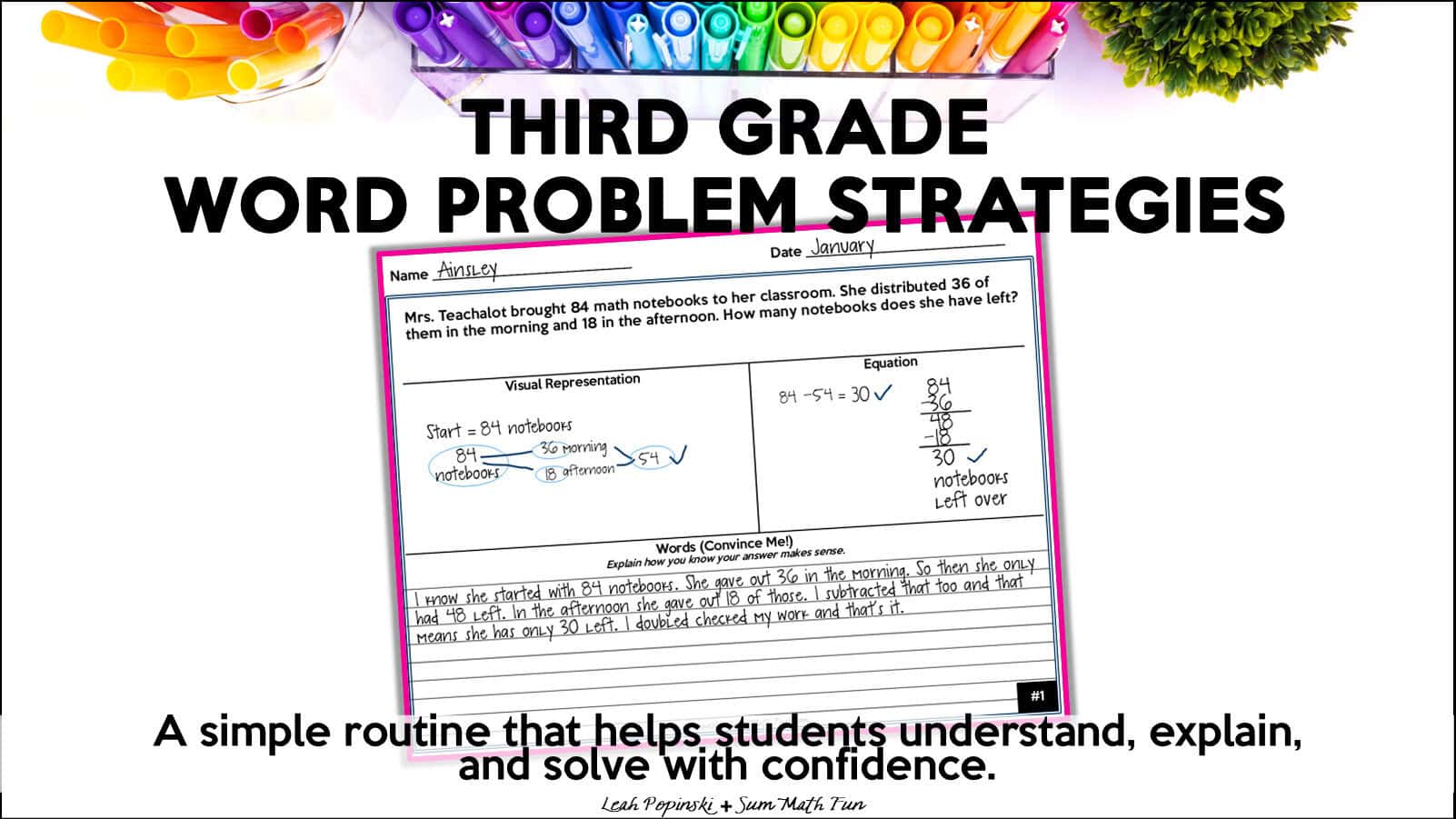
Instead of relying on keywords or guessing, students follow a clear thinking path:
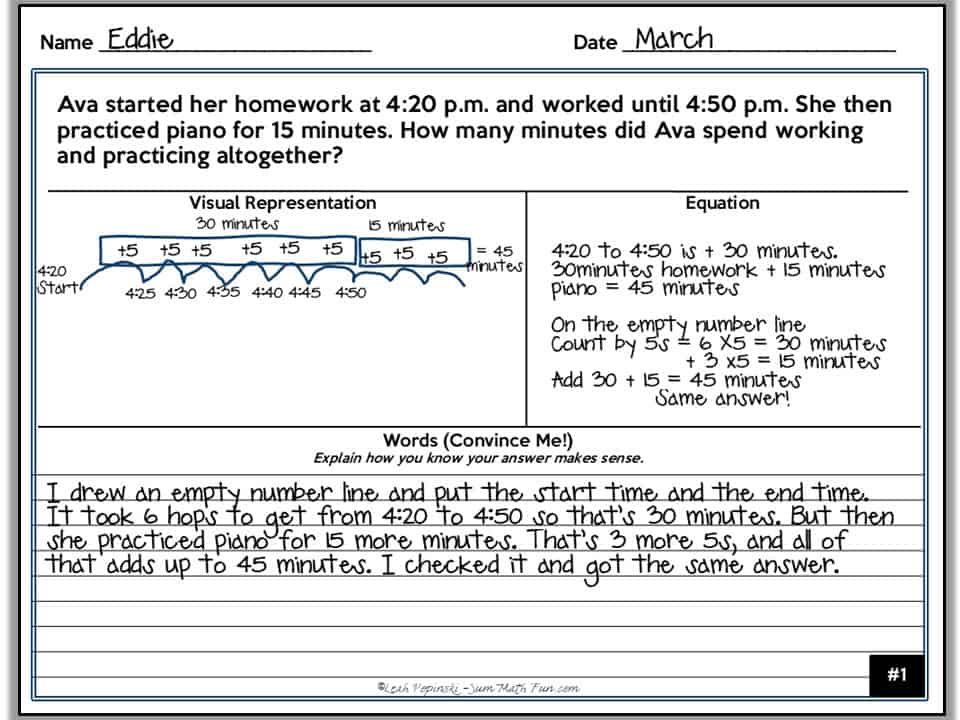
- Visual Representation – What’s actually happening?
- Equation – How does the math connect?
- Words (Convince Me) – Why does this solution make sense?
This keeps students from jumping straight to an operation—and helps them actually understand the situation first.
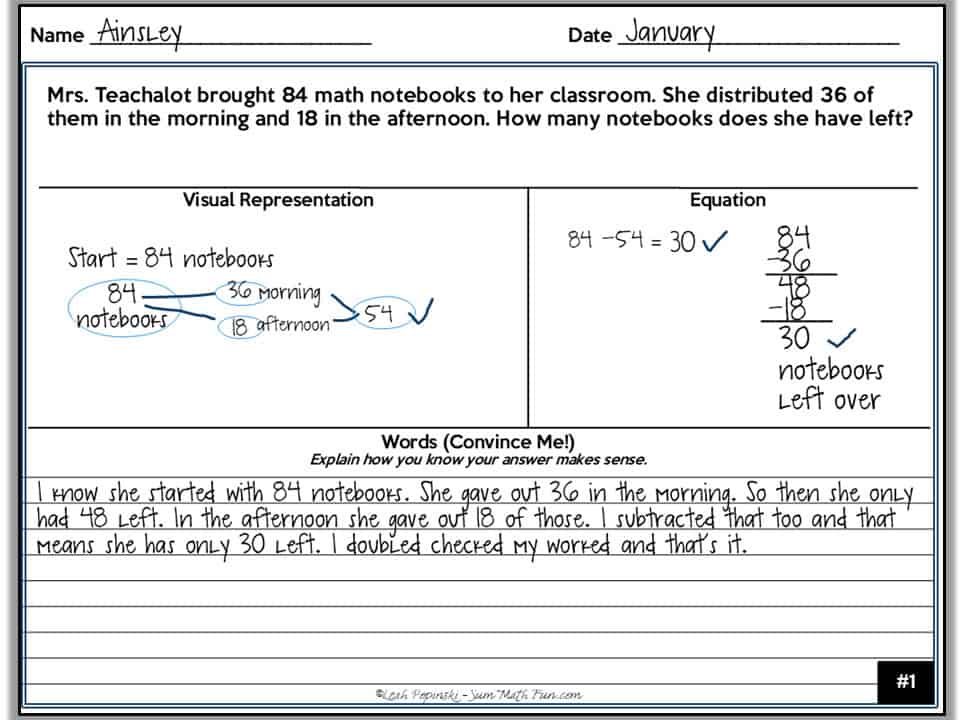
This structure helps students slow down just enough to truly understand the problem—and that’s where real growth happens.
But what really matters is what this looks like across different students.
Here’s another example showing how a student uses the same process to solve and check their work:
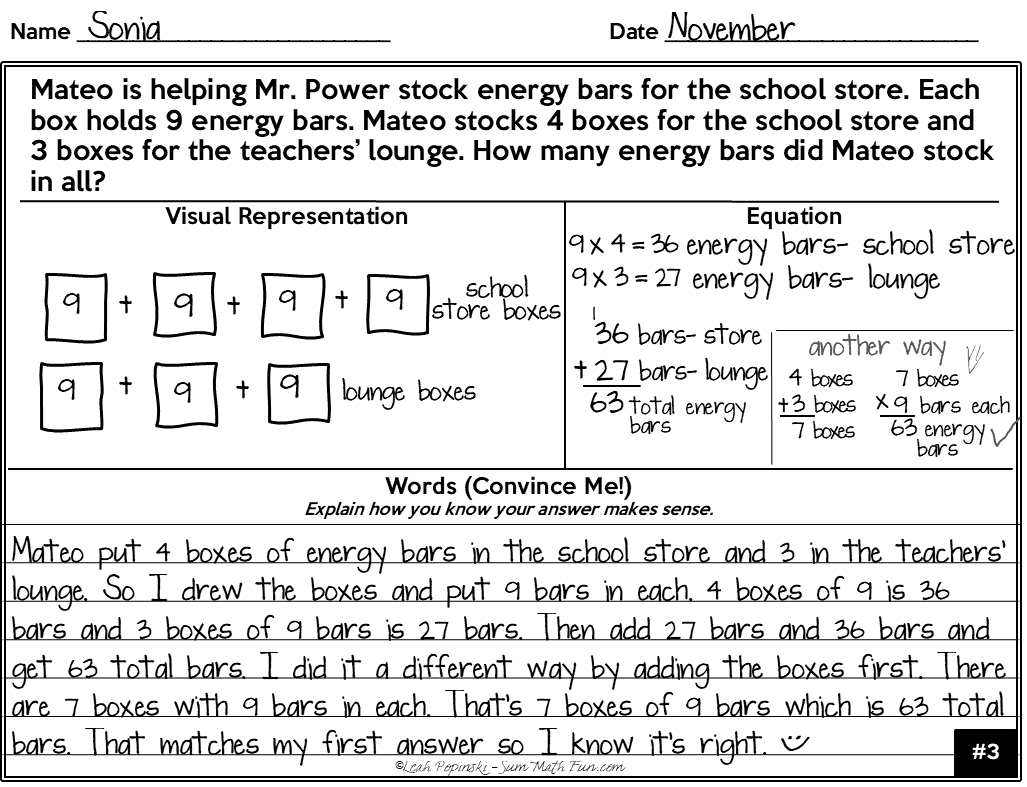
And here’s what another solved problem can look like in a student notebook:
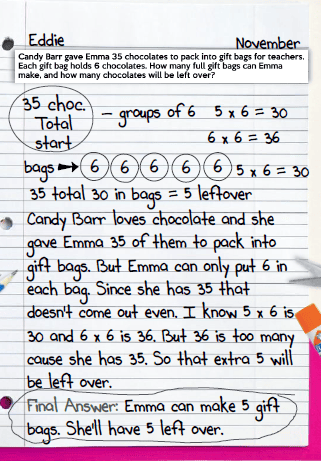
If you’d like a broader look at why students often struggle with this area of math, you may also find my post on Making Word Problems Less Scary for 2nd–4th Grade Classrooms helpful. In it, I share common patterns teachers have noticed and ways to support students early on.
📌 Save This Post for Later
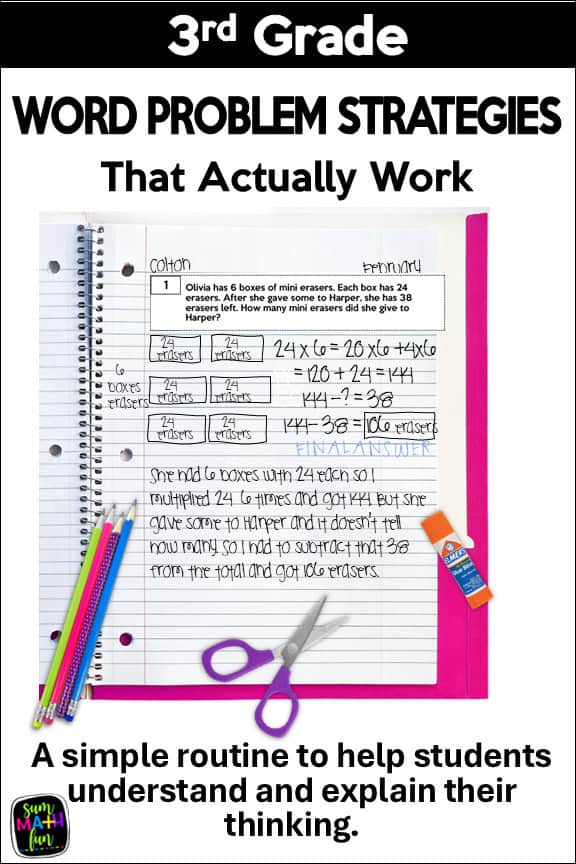
If you’d like to come back to these 3rd grade word problem strategies when you’re planning or need a quick refresher, be sure to save this post for later. Pin the image below so you’ll have the routine handy when you’re working on problem solving, small groups, or math workshop planning.
What Changes When Students Have a Process
When students begin using a consistent routine, you’ll start to notice:
- They know how to begin (no more staring at the page)
- Their work shows clear thinking—not just answers
- Math conversations become more meaningful
- You can quickly see where misconceptions are
Instead of guessing, students are working through problems with intention.
What Makes the Series Different
There are plenty of word problem worksheets out there. But this series was created with a very specific goal:
👉 Help students build independence as problem solvers
Here’s what that looks like in your classroom:
- A consistent organizer students learn once and reuse all year
- Problems that build from simple to multi-step thinking
- Built-in support for explaining reasoning (not just solving)
- A clear way to differentiate without creating separate materials
Instead of students asking, “Is this right?” you start hearing, “I know why this works.”
And that’s a big shift.
What This Looks Like in Real Classrooms
When I designed the series, I wanted it to do more than give students extra practice — I wanted it to support the real decisions you make every day. Here are a few ways those goals show up in the structure of the problems.
Tiered Problems That Make Differentiation Manageable
Each set includes problems that gradually increase in complexity, making it easier to support a range of learners without needing completely separate materials.
Some students benefit from starting with more straightforward situations, while others are ready to tackle multi-step thinking. This built-in progression helps you meet students where they are while keeping everyone working within the same routine.
The “Convince Me” Section Builds True Math Reasoning
One of the most powerful shifts happens when students move beyond getting an answer to explaining their thinking.
The “Convince Me” portion invites students to put their reasoning into words, helping them connect their visual model, equation, and solution. Over time, this strengthens understanding and makes math discussions richer and more meaningful.
Topic-Focused Sets for Targeted Practice
Here’s another example showing how the same routine supports different types of word problems, including real-world situations.
Each set centers on specific problem types or content areas — such as multi-step situations or real-world topics like time, money, measurement, and data.
This makes it easier to use the problems alongside your current unit or as a focused review, without feeling like you’re pulling in something unrelated to what students are learning.
How Teachers Are Using It in the Classroom
One of the things I love most about this 3rd grade word problem routine is its flexibility. Teachers are using the series in ways that fit their classrooms, including:
- Whole-group modeling
- Small-group instruction
- Math workshop rotations
- Intervention support
- Independent practice
Because the structure stays consistent, students can focus on the math — not figuring out a new format every time.
A Ready-to-Use Structure for Your Classroom
If you’re looking for a simple way to bring more clarity and consistency to word problem instruction, the 3rd Grade Word Problems Using the No Problem Organizer series was created with exactly that goal in mind.
It gives students a familiar structure they can rely on while giving you meaningful insight into their thinking — whether you’re teaching whole group, in small groups, or during independent work time.
You now have a clear structure you can use to support word problem thinking.
The 3rd Grade Word Problems Using the No Problem Organizer series gives you that structure ready to use—so your students can focus on understanding instead of guessing.
👉 See everything included here 3rd Grade Word Problems Using the No Problem Organizer series
Building Confidence That Lasts Beyond One Unit
When students learn how to approach a problem — not just how to solve one specific type — you start to see real changes:
- Students take more risks
- Math discussions become richer
- Explanations get clear
- And confidence grows
The goal isn’t just to get correct answers.
It’s to help students become thinkers who trust their process.
Before You Go
If word problems have ever felt like the part of math where progress comes a little more slowly, you’re in good company. Helping students make sense of complex situations takes patience, modeling, and the right supports—and it doesn’t happen overnight.
But when students begin to realize they have a process they can trust, everything starts to shift.
You start to see it in their work—clear models, connected equations, and explanations that actually make sense. Instead of guessing, students are thinking through the problem and showing how they know.
That’s when confidence builds, discussions become more meaningful, and students begin to see themselves as capable problem solvers. 🤓
This is exactly the kind of thinking I’ve designed the No Problem Organizer to support—so you can guide your students step by step without having to build the routine from scratch!
👉 See everything included here.
Thanks!
And as always . . .