Making Word Problems Less Scary for 2nd – 4th Grade Classrooms
Have you ever handed out a word problem and watched your confident little mathematicians suddenly melt into a puddle of confusion? It’s like all the math they’ve been learning for weeks (months 🤦♀️) just disappeared into thin air.
I’ve been there. My students could crank through 20 computation problems in record time, but throw in a sentence about two buses and 12 children . . . and suddenly they weren’t sure where to even start.
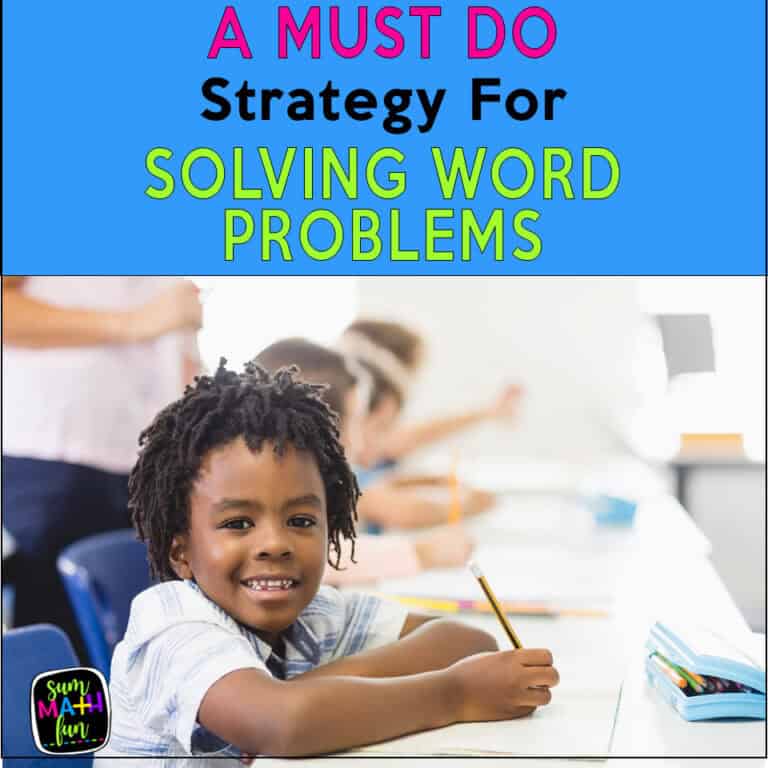
Word problems can feel tricky because they require more than computation. Students have to make sense of the story, figure out what’s important, choose the right operation, and then—oh yeah—solve it correctly. That’s a lot for an eight-year-old brain.
But here’s the good news: solving word problems doesn’t have to be scary or confusing. With the right support, your students can learn to approach them with confidence—and maybe even enjoy the process.
Why Word Problems Feel So Tricky for Students
I learned that for many students, it’s not that they can’t do the math; rather, it’s that they struggle to understand it. It’s that they don’t know where to start. Sometimes they grab at a keyword (“more” must mean add, right?). At other times, they get stuck on the story details and forget the actual question.
And then, sometimes they just guess. (I had one student who always defaulted to multiplication because, in his words, “it feels more grown-up.” 🤷♀️
The struggle isn’t ability—it’s entry points. Students need a way to slow down, break problems apart, and make sense of them step by step.
Making Sense of Problems (Instead of Using Tricks)
For years, teachers were told to give kids “keyword strategies” (if you see “altogether,” add). But the truth? Keywords don’t always work. Sometimes “altogether” means multiply. Sometimes a problem leaves out information on purpose.
That’s why I started teaching my students to make sense of problems instead of looking for shortcuts.
The shift was huge: fewer blank stares, more perseverance, and way better math talk.
How the “No Problem” Organizer Helps Students Think
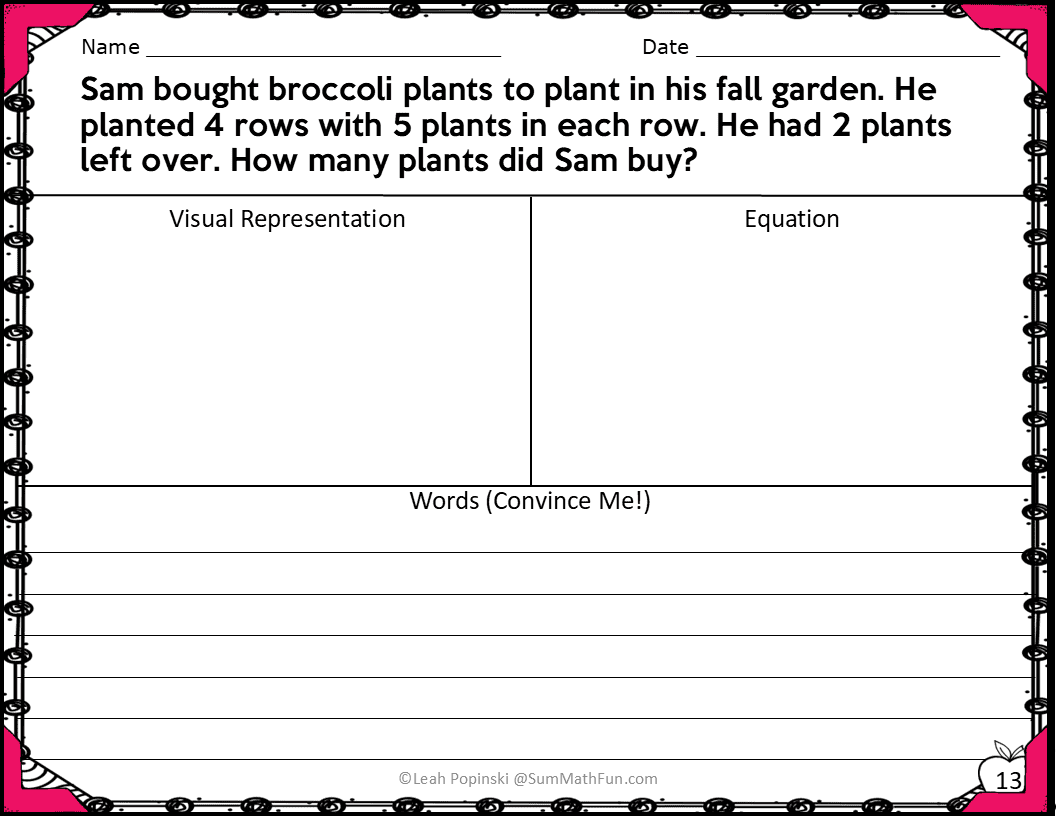
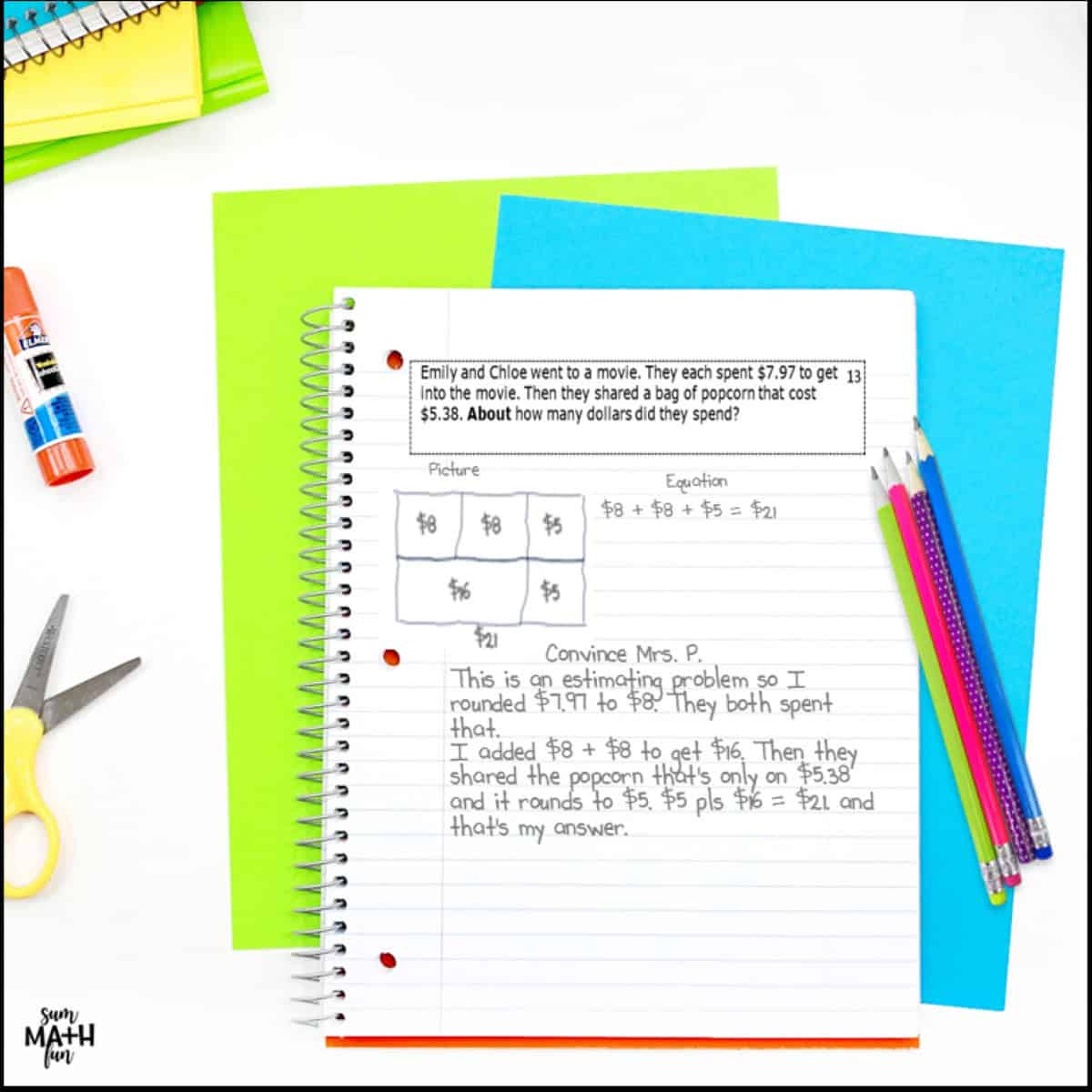
To help, I created a simple tool my students nicknamed the “No Problem” Organizer. It walks them through each part of a word problem in three different ways:
At the bottom, students also include a short explanation to Convince Me that their answer is correct. This pushes them to think deeper and communicate clearly. It also forces them to rethink and check their work.
-
Visual representation – draw a quick model or sketch
-
Equation – show the math clearly
-
Words – write a sentence that explains thinking
The best part? My students actually used it—not just in class, but during testing too. One even told me, “I brought my ‘No Problem’ paper with me in my head.” ❤️
Ways to Use Word Problems in Your Classroom
These word problem sets with the organizer built in are versatile enough to use anywhere:
-
Morning work – a calm, structured start to the day
-
Math centers or workshop – independent or partner practice
-
Small groups – reteaching, enrichment, or intervention
-
Homework – meaningful practice (parents will thank you!)
-
Test prep – confidence booster before big assessments
Teachers use the cut-and-glue version in interactive notebooks—it saves paper and makes a great reference tool!
Teacher Feedback You’ll Love
But don’t just take my word for it. Here’s what teachers who’ve used these word problem sets had to say:
-
“I love how the students have to represent their answers in three ways, visually, with an equation, and with words. This is a great way for them to practice explaining mathematical thinking.” – Valerie
-
“These math adventures are providing unique opportunities for students to apply their cognitive abilities to solve interesting life situations. The students are experiencing authentic learning.” – Mary
-
“Great for differentiation.” – Stephanie
Word Problem Resources That Save You Time
If you’ve ever wished you had a stack of ready-to-go word problems that weren’t confusing or intimidating—here you go:
-
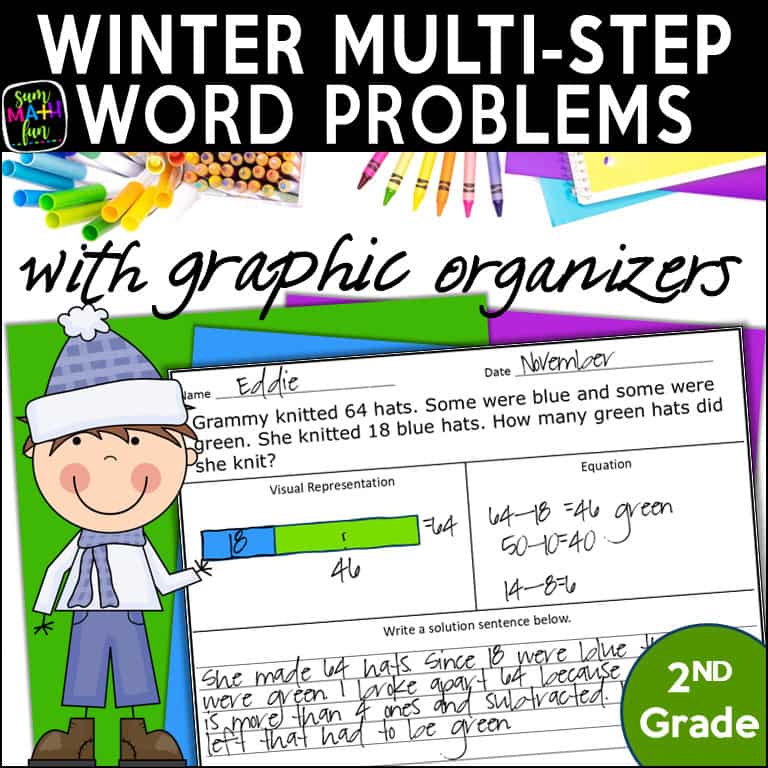
2nd Grade Addition & Subtraction Problems – scaffolded support with visuals and beginning multiplication/division.
-
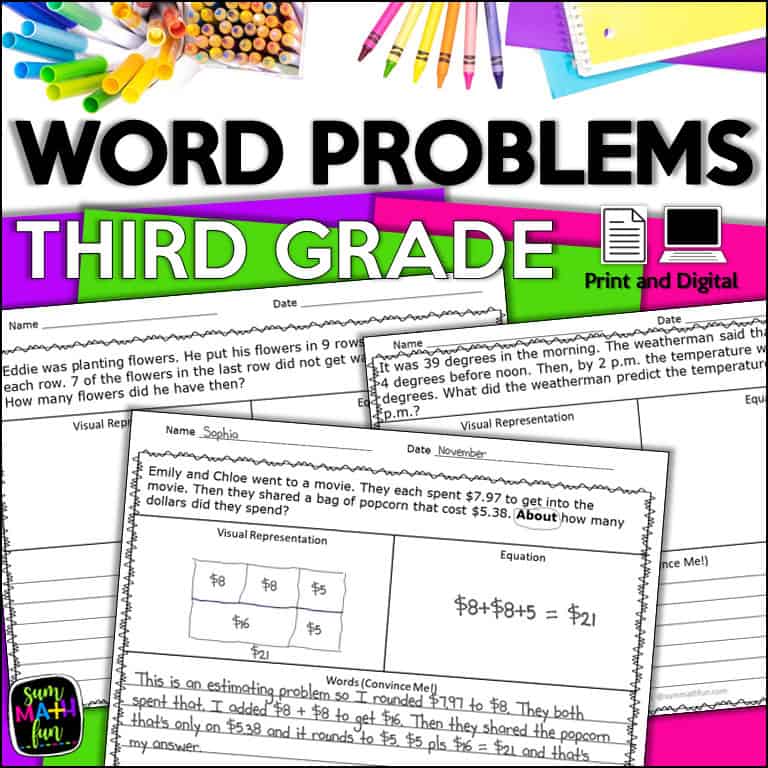
3rd Grade Mixed Word Problems – subtraction, addition, multiplication, division, and multi-step challenges.
-
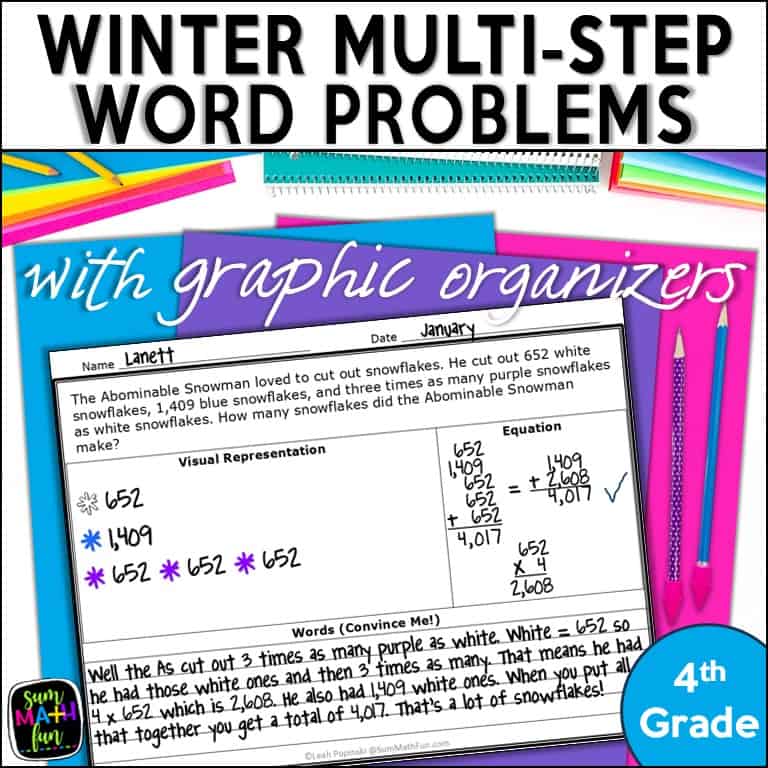
4th Grade Multi-Step Word Problems – rigorous but approachable practice that builds problem-solving stamina.
Each resource includes the No Problem Organizer, teacher posters, and answer keys—all in print-and-digital versions, zero prep.
Just click the images in this post to check them out in my shop!
Helping Students See Word Problems as “No Problem”
Word problems don’t have to send students into panic mode. With the right support, they can actually become moments where kids shine as problem-solvers.
And if your students are anything like mine, you’ll start hearing things like:
“This wasn’t even that hard once I used No Problem!” – Jasmine, Grade 3
That’s the power of making sense of math—watching your students go from stuck to confident.
Save This Post
Make sure to pin this post on Pinterest so you can keep track of these strategies for helping your 3rd and 4th graders tackle word problems with confidence. You’ll be glad to have it handy when problem-solving becomes a big focus during the school year!
Want Word Problems to Finally Feel Like No Problem 🎁
Want to try it out for yourself? I’ve put together a free word problem download that includes my “No Problem” organizer and student practice pages. It’s a simple way to test-drive the strategy in your own classroom. Grab this free download with ready-to-use word problems PLUS my student-friendly No Problem Organizer. Your kids will build confidence, show their thinking, and learn to love solving word problems.
Already subscribed? Enter your email to go straight to the download — you won’t be added twice.
Because really, helping kids see that math problems are no problem? That’s the best kind of win.