4th Grade Place Value: 7 Common Mistakes and How to Fix Them
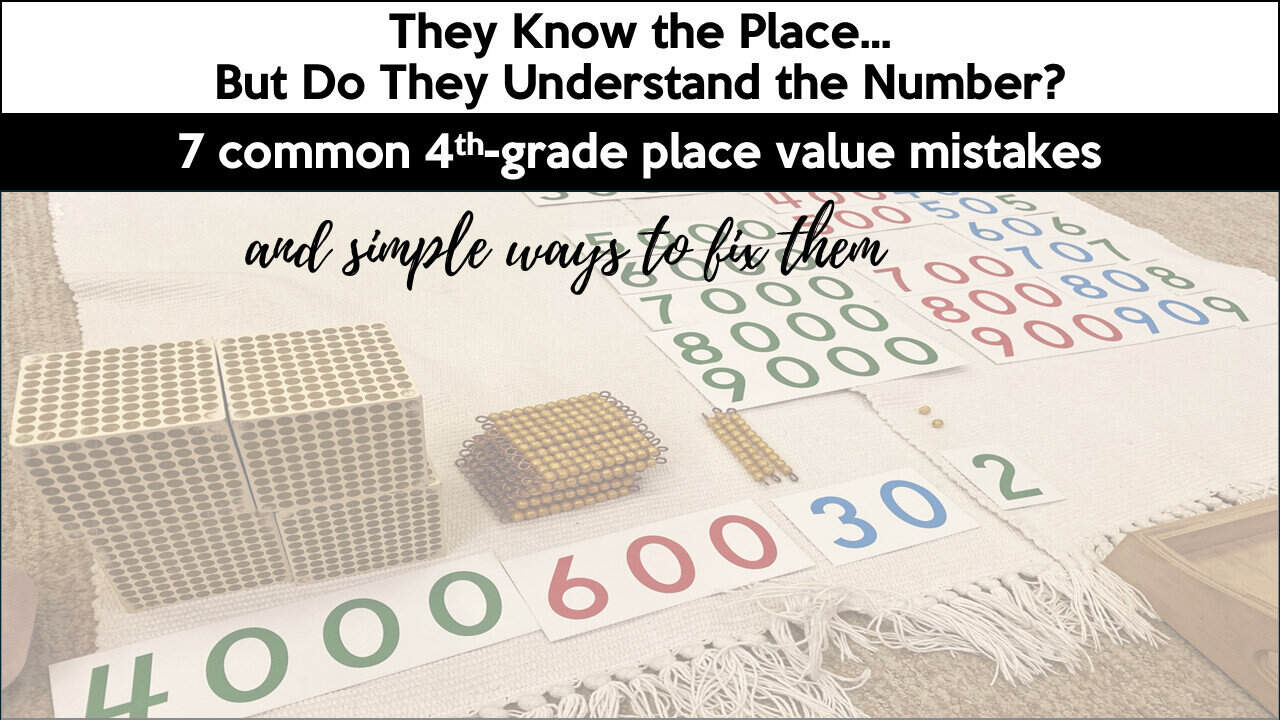
You know that feeling of satisfaction when you’ve finished teaching place value and your students seem to really get it?
They can tell you:
ones, tens, hundreds, thousands…
They can point to the ten-thousands place.
They can probably even tell you that the 6 in 64,312 is in the ten-thousands place.
So… you’re feeling pretty good.
They understand place value, right?
THEN:
You ask:
What is the value of that 6?
And someone answers:
6.
😳
Wait… What happened?
Let’s figure it out.
Place value is one of those concepts that can look solid long before it really is.
And that matters because place value isn’t just one unit students learn and move on from.
It’s a roadmap they’ll keep using throughout mathematics.
Why Deep Place Value Understanding Matters
Being able to name a digit’s place and value is important, but it’s only the beginning.
Students also need a sense of magnitude—where a number fits in relation to other numbers, how large or small it is, and what numbers could reasonably come before, after, or between it.
That understanding becomes incredibly important as the math gets more complex.
A student who knows that 48,000 is close to 50,000 has a much better foundation for estimation than a student who only knows that the 4 is in the ten-thousands place.
Later, when students multiply multi-digit numbers or work through long division, that same number sense helps them decide whether an answer is reasonable.
For example, if a student is multiplying 398 × 21, strong number sense helps them recognize that the answer should be somewhere around 8,000.
If they get 836 or 83,580, something should feel wrong.
The same idea carries into fractions, decimals, and even negative numbers. Students who can visualize where numbers “fit” develop a stronger understanding of number relationships overall.
In other words:
Place value isn’t just about knowing what each digit is worth. It helps students build a mental map of the number system.
That mental map is what helps make later mathematics make sense.
So before moving on, here are 7 common 4th grade place value mistakes to watch for—and some simple ways to help fix them.
1. Students Know the Place, But Not the Value
This is probably one of the most common place value misconceptions.
Ask:
What place is the 7 in 372,416?
A student correctly answers:
ten-thousands.
Great.
Then ask:
What is the value of the 7?
And you hear:
7.
That student knows the name of the place, but hasn’t fully connected the digit to its actual value.
In 372,416:
-
- the digit is 7
- the place is ten-thousands
- the value is 70,000
💡 TRY THIS TOMORROW
Write a large number on the board and circle one digit.
Ask:
What place is this digit in?
What is its value?
How do you know?
That last question is the important one.
It moves students beyond naming the place or value and asks them to explain the relationship between the digit and its position.
2. Students Don’t Understand the 10× Place Value Relationship
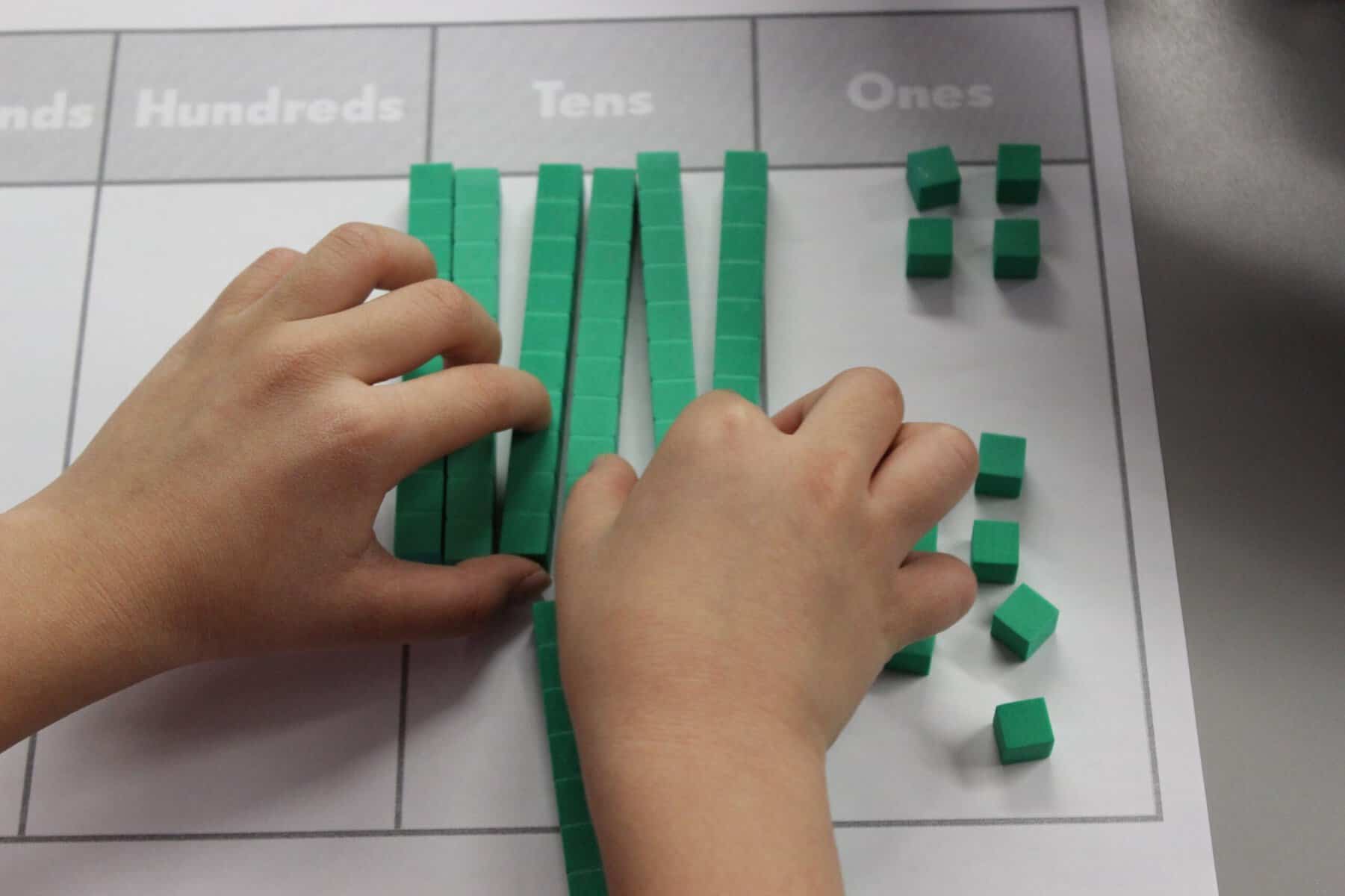
Students may be able to name every place on a place value chart without understanding how those places relate to one another.
For example:
6
60
600
6,000
60,000
Each time the 6 moves one place to the left, its value becomes 10 times greater.
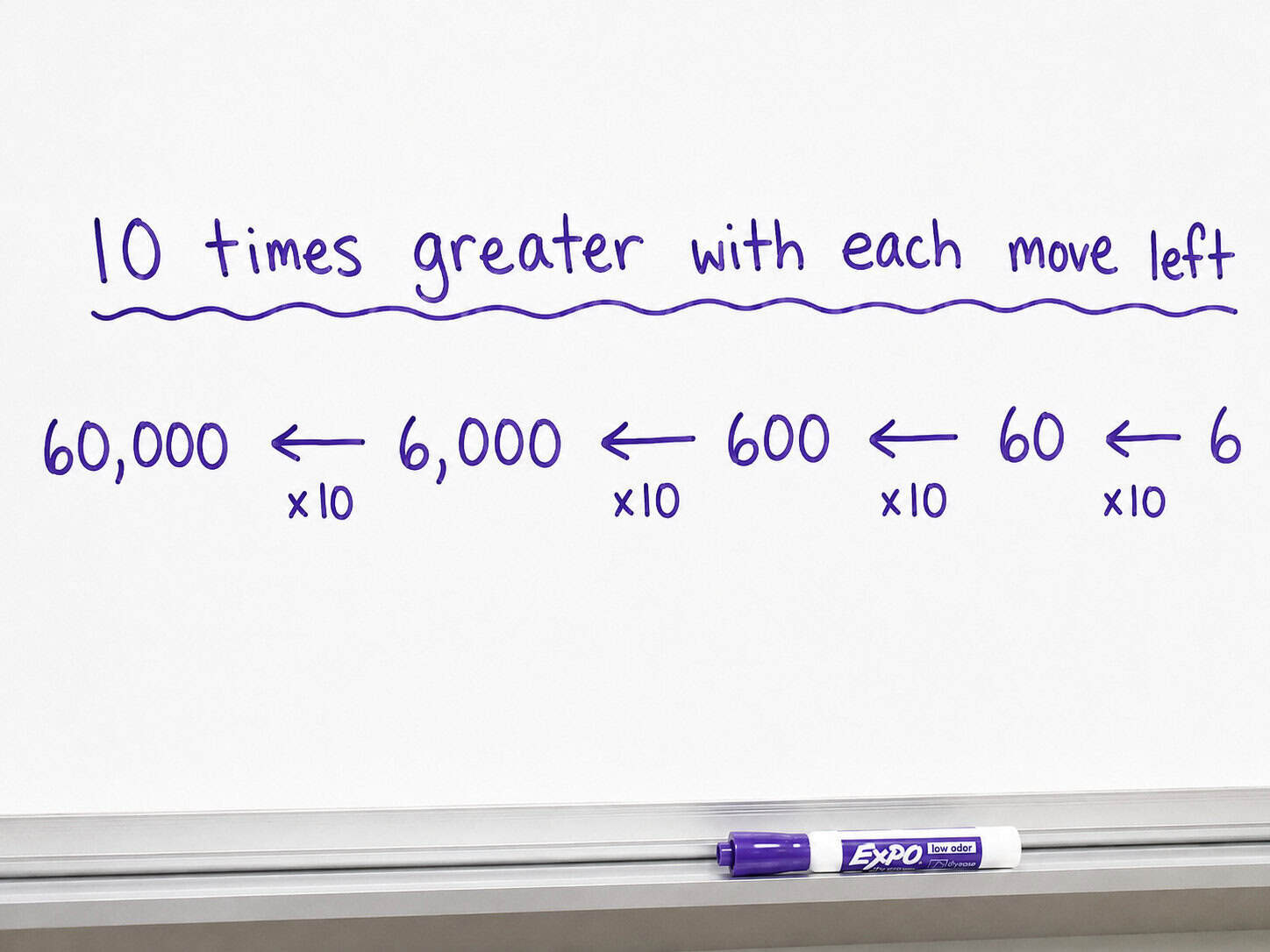
Each time it moves one place to the right, its value becomes one-tenth as much.
That relationship is much more important than memorizing place names.
Use the same digit in several different places.
Ask:
How many times greater is 8,000 than 800?
Or:
How is the 4 in 40,000 related to the 4 in 4,000?
These questions help students see place value as a system of relationships instead of a list of labels.
Then, once the 10× relationship is solid and students can easily answer questions such as the ones above, reverse the thinking:
What happens to the value when the digit moves one place to the right?
This understanding becomes extremely important when moving into decimals.
3. Zeros in Large Numbers Throw Them Off
Zeros are sneaky.
A student may have no trouble with:
326,541
But give that same student:
306,041
and things can fall apart quickly.
Students sometimes treat zero as if it means, “Nothing is here, so I can skip it.”
But zero is doing an important job.
It is holding a place.
For example, take:
405,072
The zeros are essential. Without them, we would have an entirely different number.
💡 TRY THIS
Instead of asking only what a zero is “worth,” ask:
What job is this zero doing?
That shifts the thinking from:
“There’s nothing there.”
to:
“That zero is holding the ten-thousands place.”
Another way to check understanding is to give students expanded form:
300,000 + 4,000 + 20 + 6
and ask them to write the standard form.
The answer is:
304,026
If a student writes 34,026 or 304,206, you immediately know where the misunderstanding is.
4. Reading Large Numbers Is Hard—Teach Students to Chunk Them
Large numbers can be intimidating even when students understand individual place values.
One strategy I’ve found especially helpful is to teach students to read big numbers in chunks.
We already teach children to do this with large words.
When they come to a long word, they don’t try to say the entire word at once. They break it into manageable parts.
Students can do the same thing with numbers.
Take:
66,724
Instead of seeing all five digits at once, use the comma to break the number into chunks:
66 | 724
Read the first chunk:
sixty-six
Then the comma tells us what to say next:
thousand
Then read:
seven hundred twenty-four
Put it together:
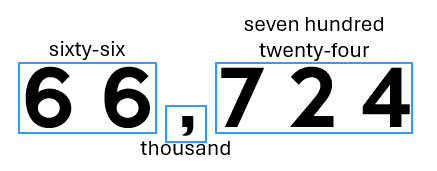
sixty-six thousand, seven hundred twenty-four
As numbers get larger, commas become incredibly helpful.
Each comma marks the end of a place value period:
billions| millions | thousands | ones
Students need to know what to say when they reach each comma.
That makes reading large numbers a wonderful way to reinforce their understanding of place value periods (families).
Start with a familiar long word, your own last name, or a student’s last name and show students how you break it into parts when you read it.
Then do the same thing with a large number.
For example:
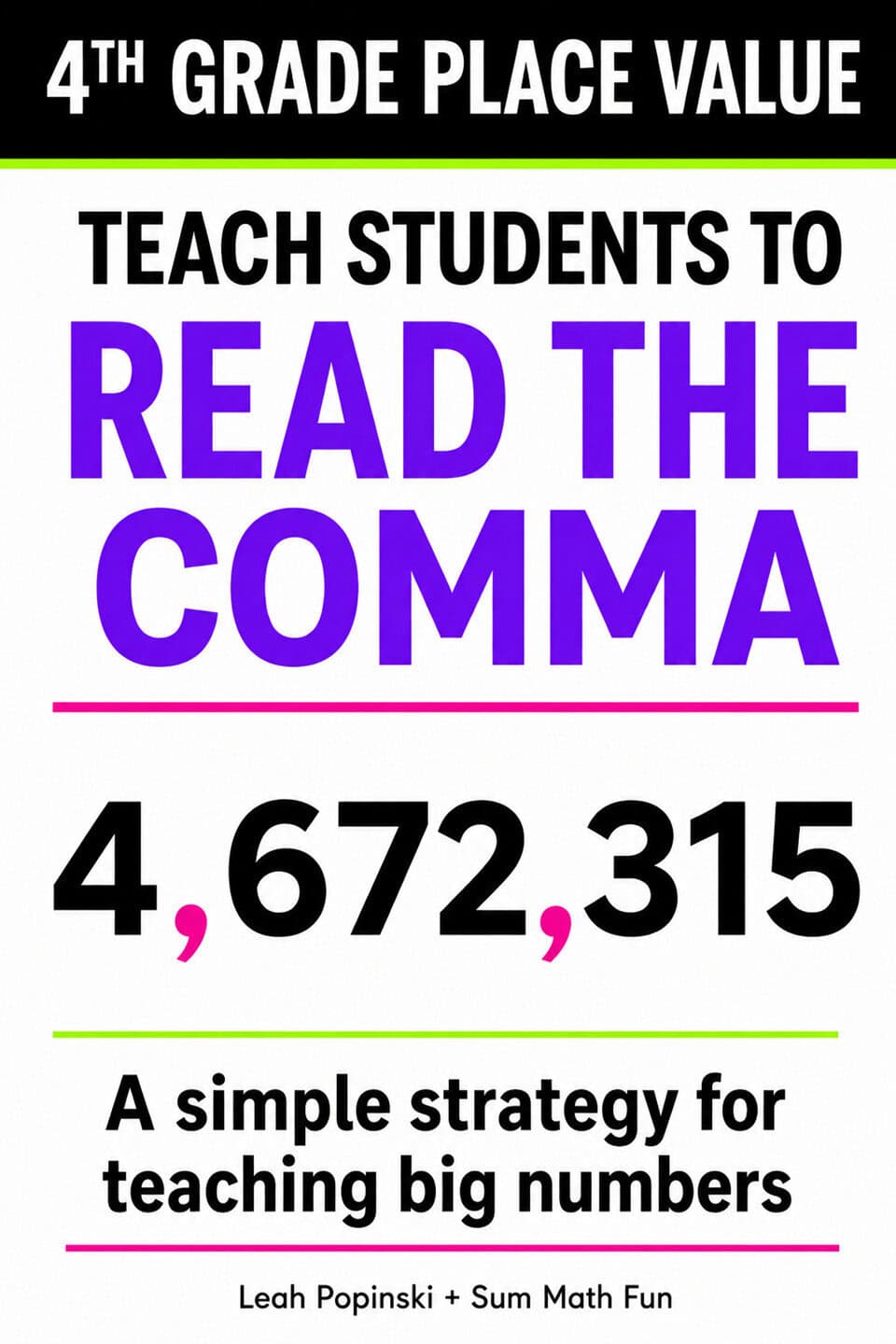
4,672,315
Read one chunk at a time:
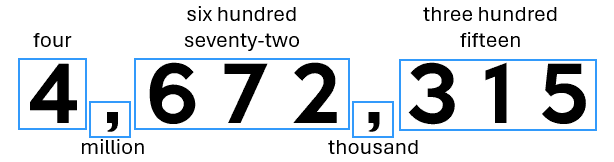
Read each comma as you come to it. Teach students to think of the comma as part of reading the number, not as something they go back and label afterward.
If a number has one comma, read that comma as thousand. That tells students that the digits before the comma are in the thousands period, or “thousand family.”
If a number has two commas, read the leftmost comma as million and the next comma as thousand. In other words, students read straight through the number, letting each comma tell them what place value period they are in.
Put the whole number together:
four million, six hundred seventy-two thousand, three hundred fifteen
💡Practice this often. Make it into a partner game/review by having one partner write a “Big Number” (thousands or millions). Their partner practices reading the number. This reinforces placing commas where they go as well as reading the number. 💜
Over time, students begin to see commas almost like road signs showing them where they are in the number.
5. Comparing Numbers Is Easier Than Finding Numbers In-Between
Students often become fairly good at choosing:
<, >, or =
But finding a number between two numbers is much more challenging.
And that’s exactly why I like asking students to do it.
To find a number in-between, students have to think about the actual size and quantity of the numbers.
There isn’t a simple symbol or memorized trick to fall back on.
For example:
45,700 < ______ < 46,000
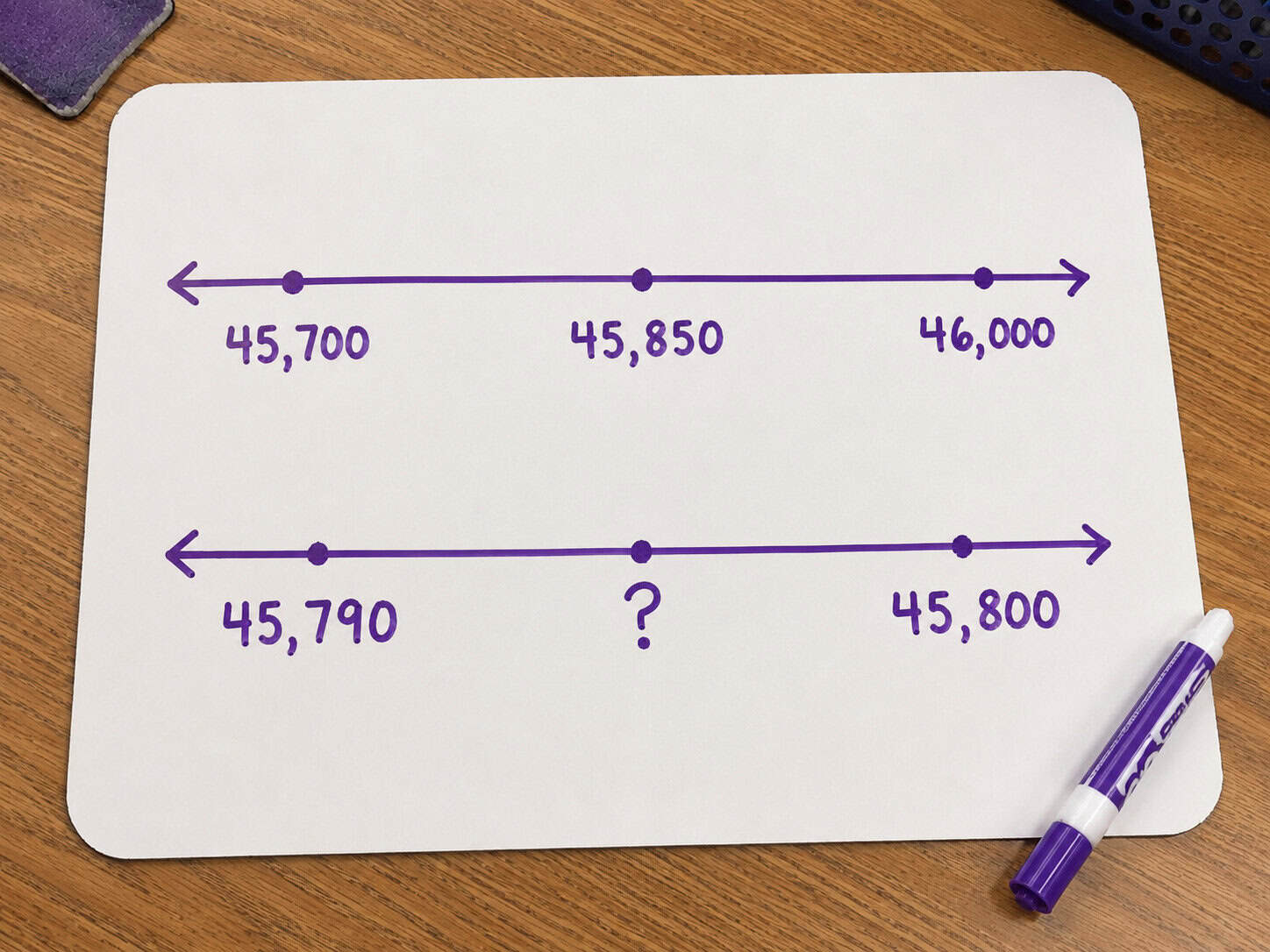
There are lots of correct answers:
45,701
45,825
45,999
But students have to understand that each answer is greater than 45,700 and less than 46,000.
Now make the interval tighter:
45,790 < ______ < 45,800
That requires even more precise thinking about magnitude.
Give students two numbers and ask them to find:
- one number between them
- three different numbers between them
- the greatest whole number that could fit
- the least whole number that could fit
- a number approximately halfway between them
🌟Then ask:
How do you know your number fits?
That question tells you far more than a simple comparison symbol ever could.
It also strengthens the mental map students are building of where numbers live in relation to one another. 🌞
6. Students Struggle With Standard, Word, and Expanded Form
Students may recognize a number in one form but struggle to move flexibly among representations.
For example:
508,304
They may be able to read it correctly, but have difficulty writing:
500,000 + 8,000 + 300 + 4
Or they may see:
seven hundred two thousand, forty-six
and struggle to write:
702,046
These tasks require students to understand not just place names, but how the entire number is structured.
Mix the forms.
Don’t always ask students to convert standard form into expanded form.
Instead, rotate among:
standard → expanded
expanded → standard
word form → standard
standard → word form
Then ask students to explain how they knew where each digit belonged.
The more flexibly students can move among representations, the more solid their place value understanding becomes.
7. Students Can Round Numbers Without Understanding Why
Many students can follow a rounding rule.
But that doesn’t always mean they understand what rounding actually represents.
For example:
47,382
To round to the nearest thousand, students may know to look at the hundreds digit.
But the deeper understanding is:
What two thousands is 47,382 between?
It lies between:
47,000 and 48,000
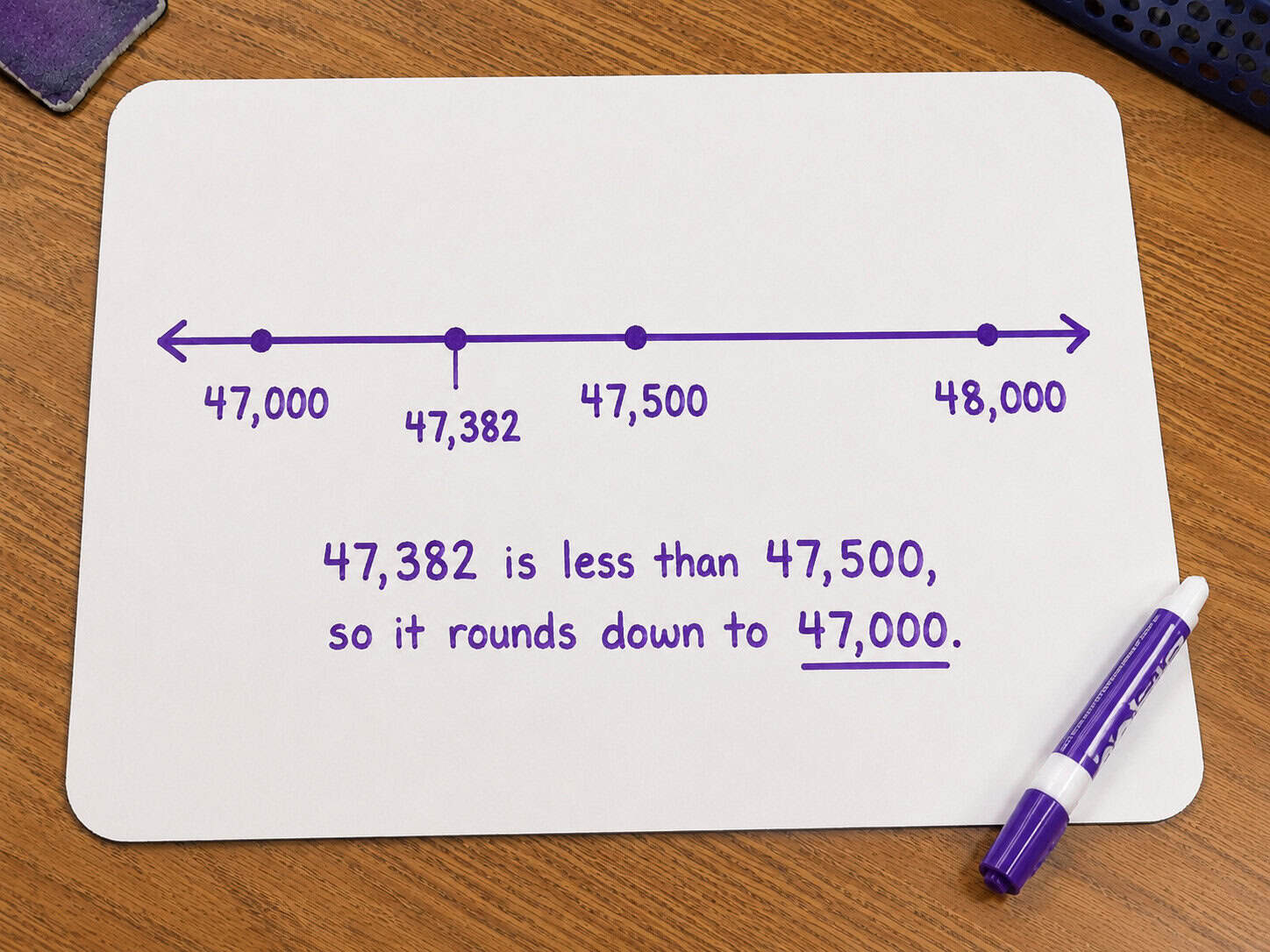
Use a number line.
Mark:
47,000 — 47,500 — 48,000
Then place 47,382 on the line.
Now students can see why the number rounds down.
This connects rounding directly back to magnitude and number relationships.
And that’s the goal.
Give Students Practice Without Making It Feel Like More Practice
Once students understand the concept, they still need practice.
But that practice doesn’t have to feel like another page of 30 nearly identical problems.
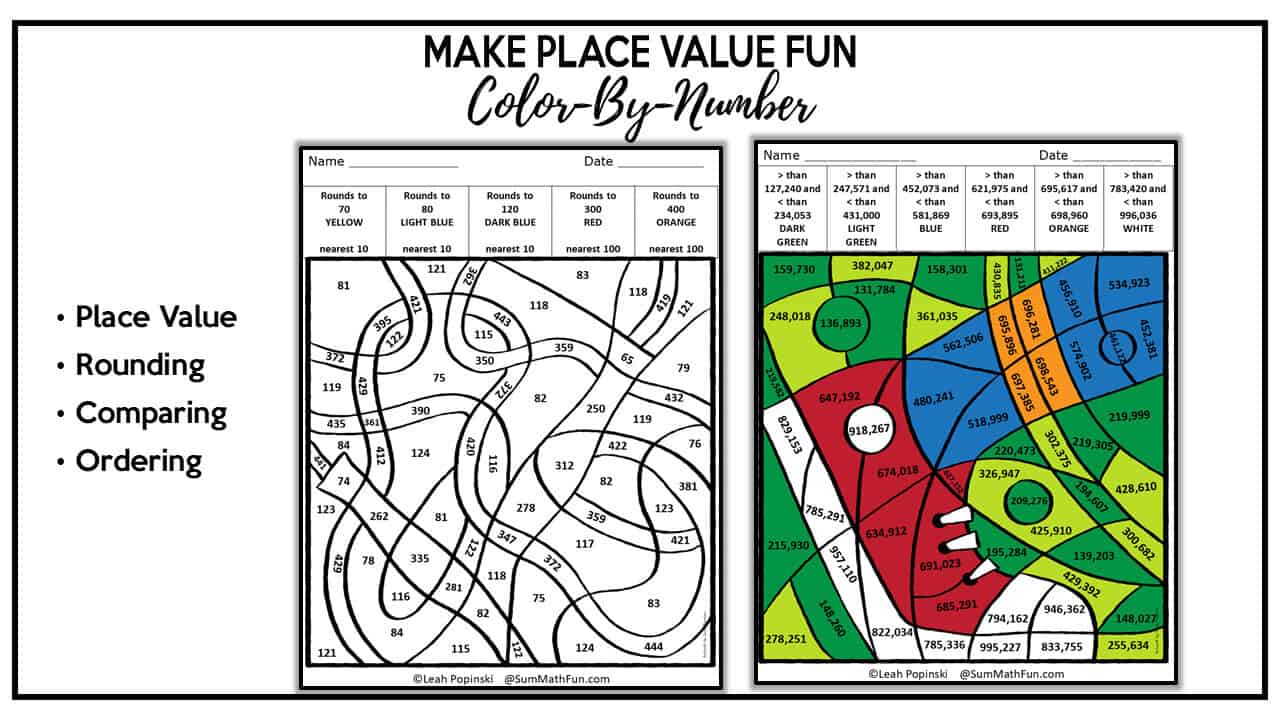
Color-by-number activities, games, task cards, and other problem-solving activities can give students repetition while keeping them engaged.
Quick math warm-ups that build number sense are another easy way to revisit these ideas without adding a full lesson.
My 4th Grade Place Value Color-by-Number activities give students practice with skills such as:
- place value
- comparing numbers
- ordering numbers
- rounding
Students solve the math to uncover the picture, which gives them a reason to keep going.
They work especially well for:
- independent practice
- math centers
- early finishers
- morning work
- review
- sub plans
It gives students the repetition they need while still feeling more like a puzzle than another worksheet.

A Quick Place Value Check You Can Try Tomorrow
Before moving on from your place value unit, put the five questions below on the board and have students answer them in their math notebooks or on dry erase boards. Or present them one at a time and have them work with a partner to answer them.
1. In 682,419, what is the value of the 8?
2. How is the 4 in 40,000 related to the 4 in 4,000?
3. Write 500,000 + 7,000 + 30 + 2 in standard form.
4. What number could go between 45,790 and 45,800? Explain how you know.
5. Round 63,482 to the nearest thousand. Explain why.
Want this ready to print? I made the 5-question place value check into a simple one-page printable you can use tomorrow.
You don’t even need to grade them.
Just walk around and look and listen.
Those five questions can tell you a lot about whether students truly understand place value—or whether they’ve simply learned how to complete familiar types of problems.
And if you uncover a few shaky spots, that’s useful information.
It gives you a chance to revisit those ideas now, while the numbers are still manageable and before students begin using place value in more complex work.
A few minutes of thoughtful practice, discussion, and explanation can go a long way.
Because place value isn’t just one chapter in the math book.
It’s a roadmap students will keep using all year—and far beyond 4th grade.
So keep listening to their explanations.
Keep asking:
How do you know?
And keep giving them opportunities to visualize where numbers fit.
Those little conversations can make a very big difference.
Short, open-ended number talks can help keep that kind of reasoning going. This no-prep math warm-up is one easy way to build those conversations into your routine.
Frequently Asked Questions About 4th Grade Place Value
1. What are common place value misconceptions in 4th grade?
Common misconceptions include knowing the name of a place without understanding the value of the digit, misunderstanding the 10× relationship between places, skipping zeros, struggling to read large numbers, and using rounding rules without understanding number magnitude.
2. How can I tell if my students really understand place value?
Ask students to explain their thinking instead of only giving an answer. Have them identify a digit’s value, describe how the same digit changes value in different places, find numbers between two given numbers, move among standard, word, and expanded form, and explain why a rounded answer makes sense.
3. What is an easy way to teach students to read large numbers?
Teach students to read large numbers in chunks and read each comma as they come to it. With one comma, students read it as thousand. With two commas, they read the first as million and the second as thousand. This helps students connect how a number is read with its place value periods.
4. Why is finding numbers in-between important for place value?
Finding numbers between two given numbers requires students to think about magnitude—how large a number is and where it fits in relation to other numbers. That understanding supports comparing numbers, estimation, rounding, and judging whether later computation answers are reasonable.
5. Why should rounding be taught with number lines?
A number line helps students see the two benchmark numbers a value falls between and which benchmark it is closer to. That makes rounding a question of magnitude and reasonableness instead of only a memorized rule.
Place Value Is a Roadmap for Later Math
A strong understanding of place value does much more than help students get through one unit.
It gives them a framework for understanding magnitude, estimation, rounding, multi-digit computation, decimals, fractions, and reasonableness.
When students can visualize where numbers fit and explain how numbers relate to one another, they are building number sense they’ll use again and again.
So as you teach 4th grade place value, keep looking beyond the correct answer. Ask students to explain, compare, estimate, and justify their thinking.
💡The goal isn’t simply for students to name the place. It’s for them to understand the number.
Pin It!
Save this 4th Grade Place Value post for later!
Thanks for reading,
And as always . . .