Thanksgiving Picture Books That Make Math Fun for Grades 1–4
🦃 Thanksgiving Math Picture Books with Gratitude and Sharing Activities for Grades 1–4
Thanksgiving is the perfect time to blend literacy and math! Using Thanksgiving picture books with math activities helps students make real-world connections while practicing counting, addition, and problem-solving. These Thanksgiving math lessons bring stories to life for grades 1–4 and make November learning both meaningful and fun.
Try pairing these Thanksgiving picture books with math activities like skip-counting with turkeys, cranberry-bread fractions, or pumpkin-pie word problems. Students will quickly see that math is everywhere — even in their favorite stories!
🍁 Thanksgiving Math Books and Activities for Grades K–2
10 Fat Turkeys by Tony Johnston10 Fat Turkeys 
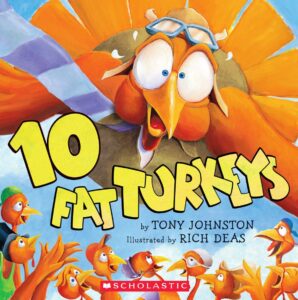
Start your Thanksgiving math fun with this silly, rhythmic story that’s perfect for practicing counting skills and pattern recognition. As you read 10 Fat Turkeys, try a few of these engaging activities to bring the story — and the math — to life in your classroom! These ideas reinforce key skills like skip counting, counting backward, and grouping, making 10 Fat Turkeys one of the best Thanksgiving picture books that make math fun for early learners.
Math Activities:
Skip-Counting Practice: Read aloud and have students clap or stomp each time the number changes. This rhythm and movement not only make counting more fun but also strengthen listening and auditory processing skills. The physical motion helps students stay focused and internalize the skip-counting pattern through sound and movement. ✨ Tip: Try switching up the actions — like snapping, patting knees, or gently tapping the desk — to keep the rhythm fresh and give students a fun way to move while learning.
Counting Down: Use turkey cut-outs or counters. Each time a turkey “falls,” count backward from 10 to 0. To make it hands-on, clip the turkey cut-outs to a “clothesline” stretched across your bulletin board or wall space, and invite students to take turns clipping and unclipping the turkeys as they retell the story. This simple interactive twist helps students visualize subtraction and sequencing while keeping them actively engaged. ✨ Tip: Use mini clothespins from a craft store and store your “turkey line” in a gallon bag so you can pull it out each November — ready to go!
Sharing Fairly: “If we have 10 turkeys and each table gets 2, how many tables get a turkey?” Make it hands-on by giving each group a few of the turkey cut-outs to “share” among tables or small groups. Students can physically move the cut-outs to model equal groups, helping them see the connection between division, fair sharing, and counting by twos. ✨ Tip: Laminate the turkeys and store them in small envelopes or baggies labeled for your November storage bin so they’re easy to reuse year after year.
Extension Idea: Create a class countdown wall where students remove one turkey each day leading up to Thanksgiving break — a festive way to practice subtraction and anticipation!
Gratitude Focus:
After reading, invite students to think about ways to help others in small, silly, or kind ways — just like the turkeys who keep showing up for one another.
This First Thanksgiving Day: A Counting Story by Laura Krauss Melmed
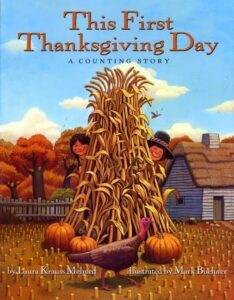
Through beautiful verse, this story counts up from one to twelve as pilgrims and Wampanoag families prepare for the first Thanksgiving together.
Math Activities:
Grouping & Multiplication Readiness: “If there are 4 tables and each table has 6 chairs, how many chairs are there in all?” Let students draw arrays or use counters to model their thinking. ✨ Tip: Use colored tiles or paper squares so students can quickly see how rows and columns form equal groups.
Build a Feast Table: Let students design their own “feast” drawing, labeling how many plates, cups, and napkins they’ll need for each guest. This helps them connect addition and multiplication as repeated addition.
Extension Idea: Create a large class mural showing everyone’s feast tables with total item counts. Add up the numbers for the whole class to see how big your “community meal” would be!
Gratitude Focus:
Use this book to spark a discussion about teamwork: “How did everyone in the story work together to prepare?” Encourage students to notice ways they help and are helped in the classroom.
Thanksgiving Counting by Barbara Barbieri McGrath
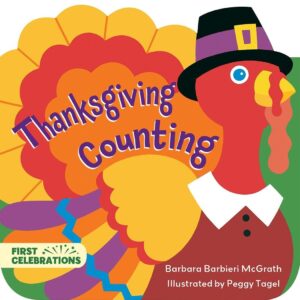
A sweet, simple picture book that introduces early counting through classic Thanksgiving scenes — setting tables, passing food, and celebrating together.
Math Activities:
Table Tally: Set up a mini “feast station” with plastic plates or pictures. Count how many of each item you’d need for 5, 10, or 12 guests. ✨ Tip: Use small paper slips labeled with numbers to make quick, reusable tally cards.
More and Less: Compare sets: “There are 8 napkins and 5 cups. Which do we have more of? How many more?” This builds comparison language and number sense.
Extension Idea: Turn the activity into a mini-survey: Have students poll classmates on their favorite Thanksgiving food, tally the votes, and create a simple picture graph.
Gratitude Focus:
Talk about preparing a place for others — not just with plates, but with kindness and patience. Students can name simple ways they make others feel welcome.
🥧 Thanksgiving Math Books and Activities for Grades 3–4
Cranberry Thanksgiving by Wende & Harry Devlin
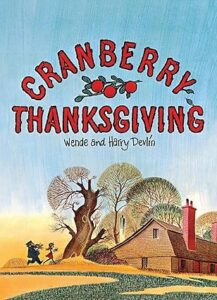
Maggie and her grandmother live by the sea and are famous for their cranberry bread. Each Thanksgiving, Grandmother invites someone “poor or lonely” to share their meal. When Maggie invites scruffy Mr. Whiskers, an unexpected lesson about kindness and humility unfolds — and yes, the real cranberry bread recipe is printed in the back! 🤓
Math + Gratitude Activities:
Fraction Fun with Recipes: Use the cranberry bread recipe to practice doubling or halving ingredients. “If one loaf uses 2 cups of flour, how much for 3 loaves?” or “If you halve the recipe, how much flour and sugar will you need?”
Measurement Conversions: Convert cups to tablespoons or teaspoons to reinforce real-world measurement math. ✨ Tip: Print a simple conversion chart and laminate it for your math centers — students love using it to “check” their baking math.
Sharing Challenge: Bring in a loaf for students to sample (optional). “I cut the loaf into 8 pieces and then each of those into 4 so we’d have enough to share with the principal, assistant principal, and me! How many pieces did I have? Will I have any left over?” (Answer: 8 × 4 = 32 pieces — a sweet way to turn dessert into division.)
Extension Idea: Have students create recipe cards showing how to adjust ingredient amounts for different group sizes — a perfect connection to fractions and proportional reasoning.
Gratitude Focus:
Ask students to reflect: “How does sharing — even something small — make everyone feel part of the group?”
One Grain of Rice: A Mathematical Folk Tale by Demi
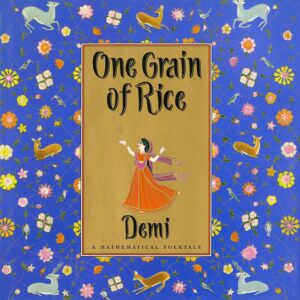
In this timeless folktale, Rani outsmarts a greedy raja by requesting one grain of rice doubled each day. Her clever plan teaches a powerful math lesson on exponential growth. The story beautifully illustrates fairness, exponential growth, and generosity.
Math Activities:
Powers of 2 Practice: Chart the doubling pattern for 30 days — students are amazed by how quickly numbers grow. ✨ Tip: Give pairs of students small counters or beans to model the doubling visually for the first 10 days before moving to charting.
Sharing Extension: Imagine dividing the rice among villagers — “If Rani shares half each day, how many days until everyone has enough?” This promotes reasoning about division and fractions.
Extension Idea: Create a “Kindness Multiplies” wall. Each time someone helps a classmate, post a paper grain of rice. Watch the kindness double just like in Rani’s story!
Gratitude Focus:
Discuss how Rani’s choice to share reflects true generosity. Ask: “What happens when one person’s fairness helps everyone?”
Project Popcorn by Laura Driscoll
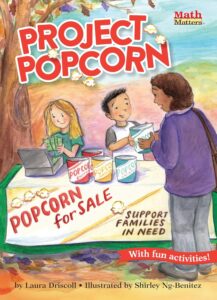
When students sell popcorn for a community project, they use math skills to track their fundraising progress. It’s realistic, math-rich, and community-minded — perfect for the gratitude season.
Math Activities:
Goal Graphing: “If we want to raise $300 and each bag sells for $3, how many bags must we sell?” Let students create a bar graph showing daily sales progress.
Rate of Progress: “If we sold 45 bags last week and 60 this week, how much closer are we to our goal?” ✨ Tip: Display a classroom “goal thermometer” where students color in sections as totals increase — a visual motivator for problem-solving.
Extension Idea: Connect the math to a real-life cause — have students brainstorm a class “giving project” and use mock data to plan how much they could raise.
Gratitude Focus:
Celebrate teamwork. “How does everyone’s small contribution add up to something big?”
💛 Helping Students See Gratitude Beyond Possessions
Here are some ways to seamlessly increase the actions and feelings of gratitude in your classroom.
Encourage your students to:
-
Count acts of kindness (not belongings) in the classroom.
-
Share supplies or help a partner solve a problem.
-
Notice helpers — the people who quietly make things better each day.
Small acts, shared together, multiply a feeling of belonging — and that’s math worth celebrating.
💛 Counting More Than Numbers
These Thanksgiving stories remind us that math can help children count far beyond numbers on a page. It helps them notice kindness, fairness, and the ways we lift one another up.
Whether you’re planning Thanksgiving math activities for centers or whole-group lessons, these ideas will make math meaningful all month long.
Here’s to full hearts, helpful hands, and math lessons that make the season truly meaningful. 🍂
To make it easy for you to find these books, I’ve included Amazon affiliate links. If you decide to purchase through a link, Amazon may provide a small commission at no additional cost to you. 🤓
📌 Pin This
Encourage other teachers to bring gratitude and math together this Thanksgiving season!
✨ I hope these Thanksgiving math book ideas bring extra fun (and a little less stress!) to your November lessons. I’d love for you to pin this post so other teachers can find it too. Thanks for being part of this fun math community—I’m so glad you’re here!