Quick Math Early Finisher Activities for Anytime Learning
Tame Those “I’m Done!” Moments ✏️
If you’ve ever heard “I’m done! What do I do now?” five minutes into your math block, you’re not alone.
Early finishers can be amazing—but they can also throw off your classroom flow if you’re not prepared. The key is having a stash of meaningful, engaging math activities ready to go.
In this post, you’ll learn one of my favorite quick, low-prep math activities that’s perfect for any grade level. It’s hands-on, easy to differentiate, and will help you build an early finisher stash your students will actually beg to use.
Why Every Teacher Needs an Early Finisher Stash
Having an early finisher plan isn’t just about keeping students busy—it’s about keeping them learning.
An effective stash of early finisher challenges:
-
Reinforces key math concepts through meaningful practice
-
Encourages problem-solving, critical thinking, and math vocabulary
-
Keeps your classroom calm and productive when students finish early
-
Gives you time to work with small groups or check in with students who need extra help
When your early finishers are engaged and challenged, your whole classroom benefits.
The Quick Math Early Finisher Activity
This activity, called the Shape Code Challenge, turns simple shapes and numbers into engaging, student-created math problems!
It’s versatile, quick to create, self-checking, and can be tailored to any grade level—from first-grade addition to fifth-grade fractions and place value.
Here’s how to build your stash quickly and easily.
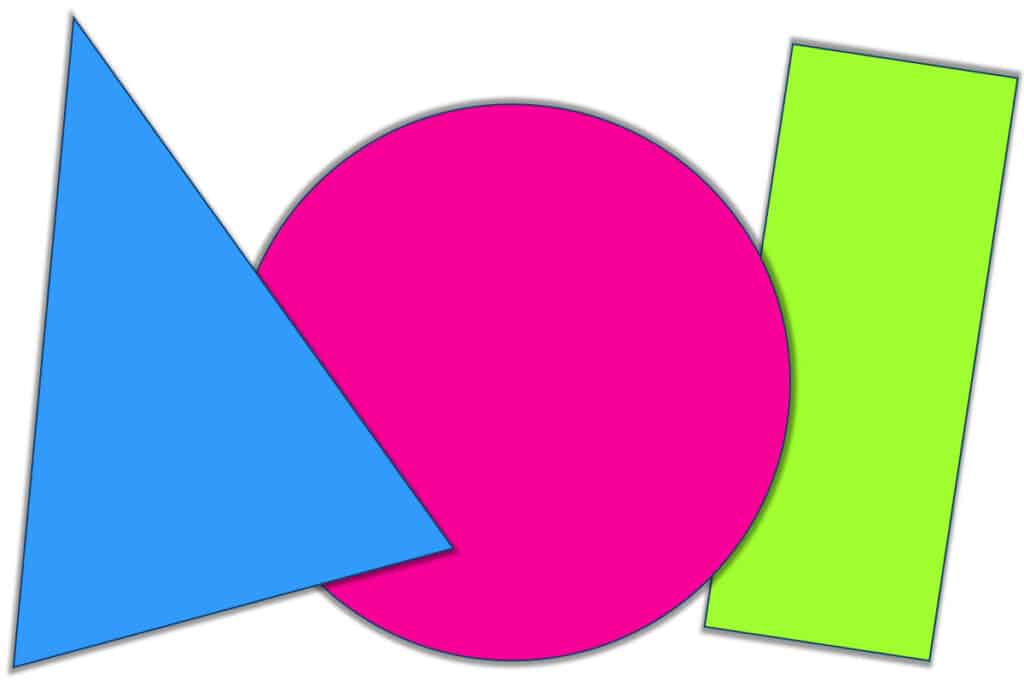
Step 1: Create Your Shapes
Use a die-cut machine, such as a Cricut, or quickly hand-cut different shapes from construction paper. Keep it simple and quick for less stress. Circles, triangles, squares, and rectangles work great! If your students have learned about trapezoids, hexagons, or other shapes whose names you want to keep fresh in their minds, include those, too, for extra vocabulary practice. 🤓
Make each shape large enough for students to see from their seats, and laminate them for durability.
💡(In a pinch, you can even draw the shapes on your whiteboard using different colors for visual interest—yes, I’ve done that too – probably too many times!)
Step 2: Add Numbers or Equations
Use a dry-erase marker to write numbers or short equations on each shape. To begin, I suggest writing one even and one odd number on each shape. This allows for more differentiation and varied questions.
-
Primary grades: Focus on addition and subtraction within 20.
-
Upper grades: Include larger numbers, all four operations, or even fractions and decimals.
Choose numbers that match the skill level you’re currently teaching—instant differentiation built right in!
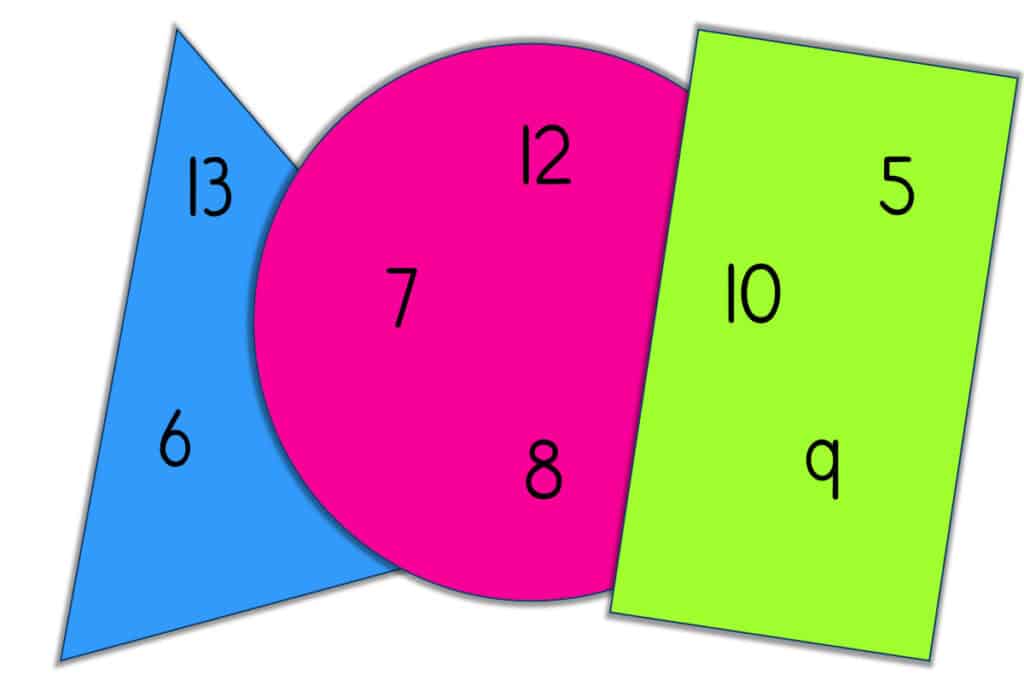
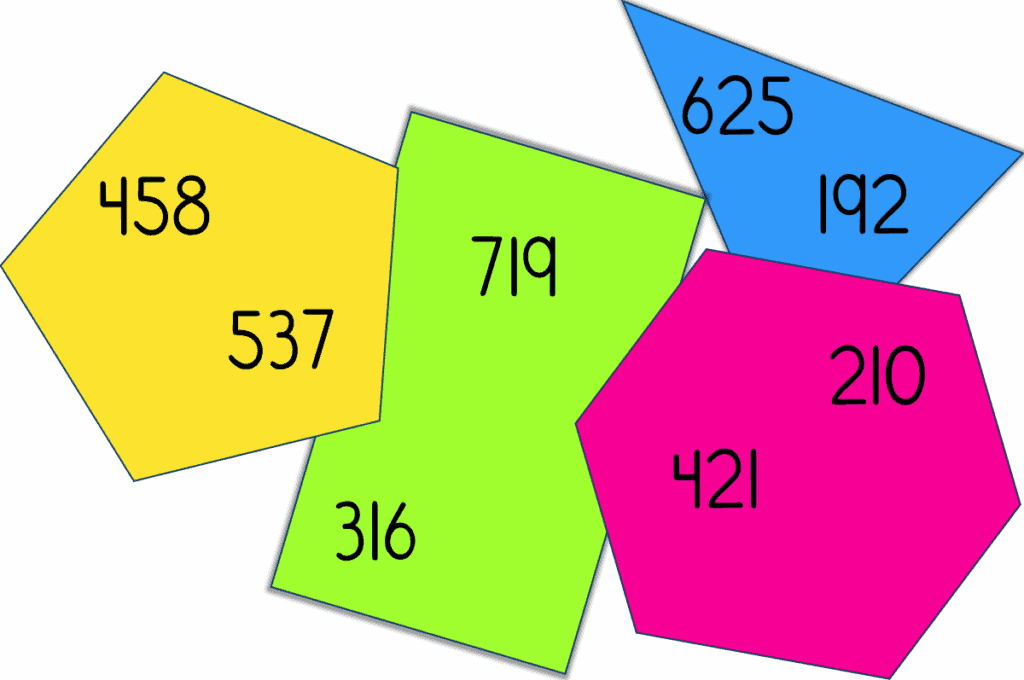
Step 3: Challenge Your Students
After students have had time to examine the display of shapes and numbers, it’s time to let the math thinking begin! You can prompt them with questions such as:
-
“What is the sum of both numbers in the triangle?”
-
“What is the difference between the even number in the square and the odd number on the trapezoid?”
-
“Use any two of the shapes to create a true equation.”
-
“Write a word problem that matches one of these shapes.”
-
“What is the quotient of the largest even number in the pentagon and the smallest number in the hexagon?”
Once students are comfortable, make things even more interesting by overlapping the shapes. This simple twist adds an element of reasoning and spatial awareness!
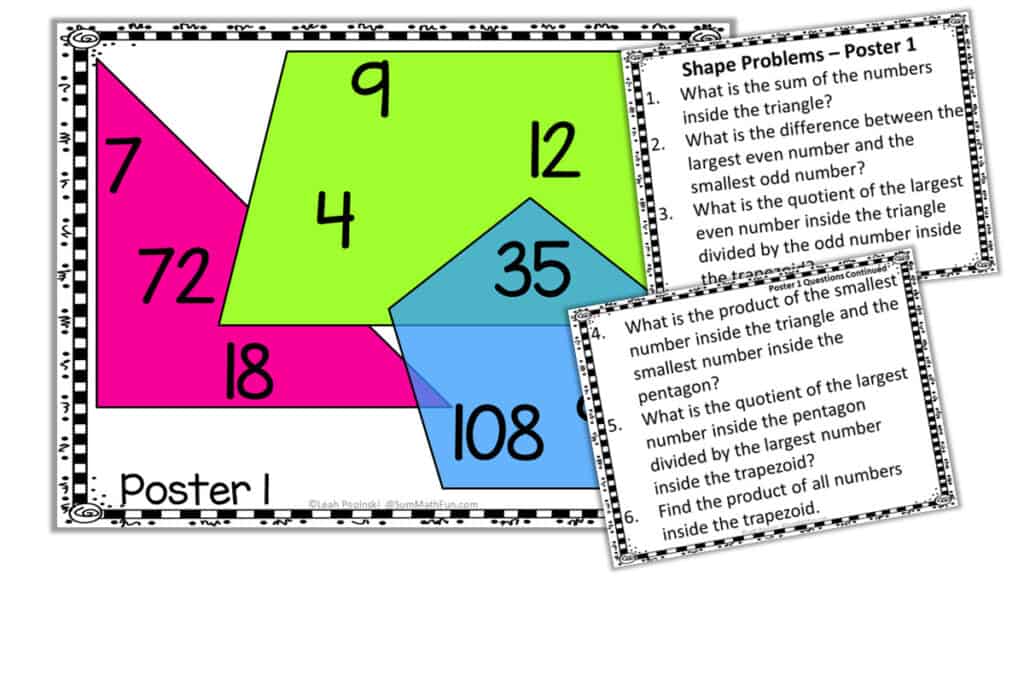
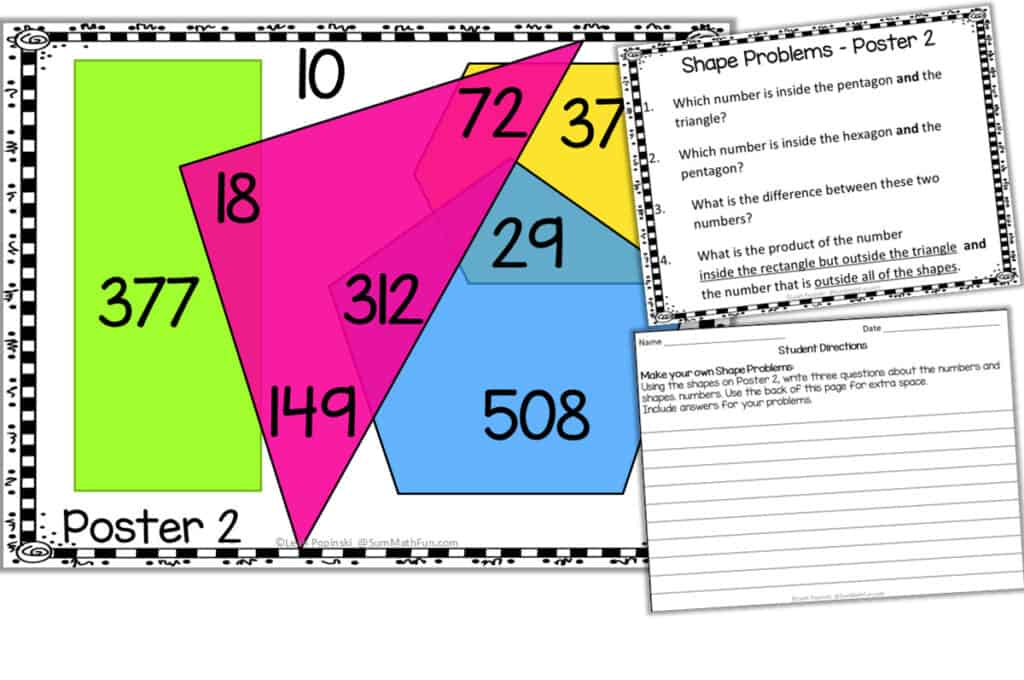
Now you can ask questions like:
-
“What’s the sum of the numbers inside the triangle?”
-
“Which number is inside both the trapezoid and the pentagon?”
-
“What is the product of the number inside the rectangle but outside the triangle and the number that is outside all of the shapes?”
For added rigor, invite students to create their own multi-step questions using two or more operations, or to explain how they know their answers are correct. You’ll be amazed at how naturally they begin using math vocabulary, reasoning, and justification—all from a few simple shapes!
Extensions:
Let Students Build the Challenges
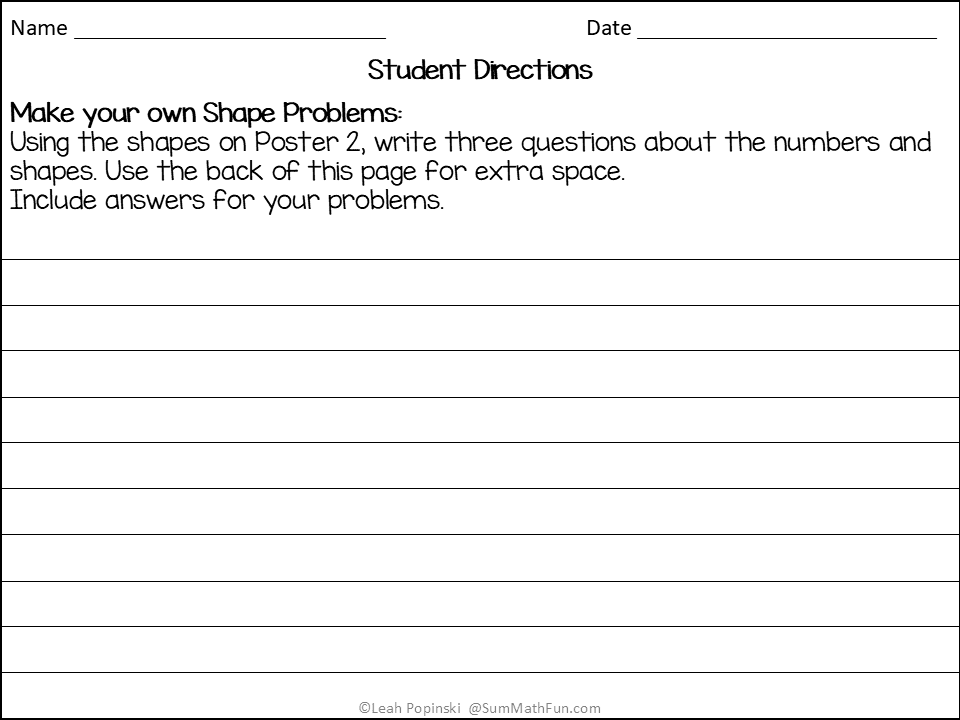
Once students understand how the Shape Code Challenge works, it’s time to let them design the problems!
They can write their problems on a class poster or use the free printable page from the resource below.
Having students create problems is powerful—it raises the rigor, builds ownership, and gets them using math vocabulary naturally.
(Bonus: you’ll end up with a classroom display full of student-made math challenges!)
Tips and Tricks for Success 💡
-
Start small: Introduce two or three shapes at a time.
-
Mix it up: Change numbers weekly to match your current math topics.
-
Keep it visible: Post the shapes on your whiteboard or math center wall.
-
Laminate everything: You’ll use these all year long!
This simple setup takes minutes—but it will give you hours of peace during math time.
Build Your Early Finisher Stash in No Time
Once your students know the routine, you’ll find them grabbing Shape Code Challenges anytime they finish early.
This activity works beautifully as:
-
A math warm-up
-
A fast finisher task
-
A math station rotation
-
Or even a quick “brain break” that keeps math skills sharp!
Your early finishers will love it, and you’ll love how independent it makes them.
Want to take this quick math activity up a notch? Here’s one of my favorite ways to make it even more engaging!
💡 Turn It Into an Interactive Math Bulletin Board!
Want to take this idea a step further? Turn it into a bright, interactive bulletin board your students can use all year long!
Start by cutting out three or four large shapes—enough to fill your board. Choose colors that pop and match your classroom theme (or just go with your favorites—I always do! 😊). Add numbers with a dry-erase marker so you can change them anytime.
Next, set up a little “math challenge station” nearby. A small desk or table works perfectly! Stock it with lined index cards, a few pencils, and a basket for collecting question cards.
Here’s how it works:
Students use the numbers in the shapes to create three math questions on their card. Then, they swap with a friend, solve each other’s problems, and offer ideas to improve the questions even more. Once everything looks good, they write their name on the back and drop their card into the question basket.
After a few days, choose several cards to post on the board for classmates to solve. Your students will love seeing their own work displayed—and you’ll love how engaged they are!
It’s simple, colorful, and something you can refresh anytime with new numbers or challenges. Perfect for early finishers, math centers, or even a quick time-filler that keeps everyone thinking!
✨ You’ll be amazed at how this quick early finisher idea keeps math fresh, fun, and meaningful all year long!
Related Posts You’ll Love 📚
If you’re building your early finisher stash, you’ll also enjoy these teacher-favorite posts:
-
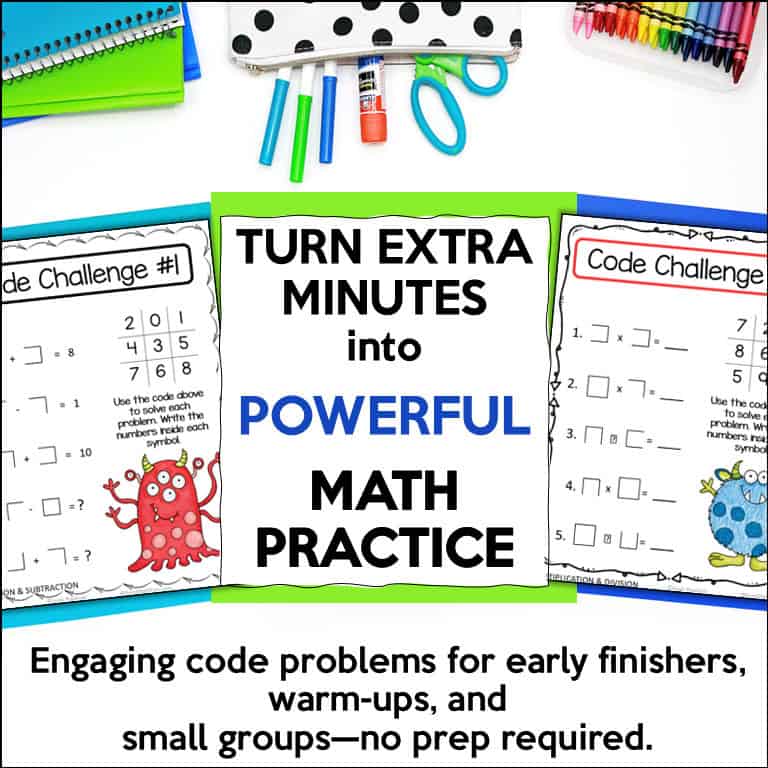
Quick & Engaging Math Code Problems Every Teacher Needs in Their Toolbox
-
Early Finishers in Math: Free Engaging Challenges to Keep Students Learning
Each one is packed with easy, engaging ways to keep your students learning—all while giving you back your valuable prep time.
Grab Your Free Math Shape Code Problems 📝
Want to get started right away?
Subscribe below to receive your free printable Math Shape Code Problems.
You’ll instantly have ready-to-use math challenges that your students can solve—or create—for anytime learning.
These make perfect early finisher activities, morning warm-ups, or quick review tasks that take zero prep and deliver maximum engagement.
👉 Get Your Free Math Shape Code Problems
Keep Early Finishers Engaged All Year Long
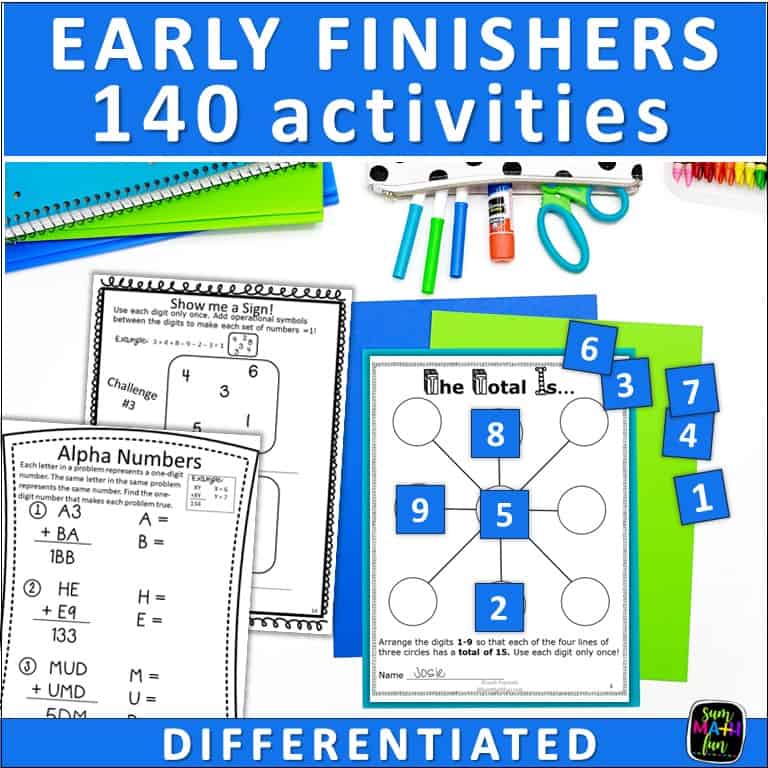
If you’re ready to expand your early finisher options even further, check out my Early Finisher Bundle—packed with 140 enrichment activities for Grades 3–5.
Each challenge builds problem-solving, reasoning, and computation skills through fun, no-prep tasks your students will love.
It’s the ultimate time-saver and the perfect complement to your early finisher stash!
Click the image below to see the Early Finisher Bundle.
Save These Early Finisher Activities
Be sure to save this post so you can easily come back to it later! Just click the image below to add the pin to your favorite board of math ideas on Pinterest. You’ll be able to quickly find these activities when you’re looking for an easy way to engage those early finishers!
Thanks!
And, as always…